
How to Choose a Plastic Pipe Extrusion Line?

Time:2026-11-06 Author:Liam
0%

Choosing a Plastic Pipe Extrusion Line is a major production decision, not simply a matter of selecting the fastest machine. The right configuration depends on pipe material, diameter range, wall thickness, output targets, and available floor space. A line designed for small-diameter water pipes may not suit large drainage pipes. Details matter. Screw design, die sizing, vacuum calibration, cooling capacity, and haul-off stability all affect the finished product.

Buyers should compare equipment against real production needs. Ask manufacturers for documented output ranges, energy requirements, changeover procedures, and support arrangements. If possible, review sample pipes and observe a similar line operating. A smooth surface and consistent dimensions are useful signs, but they do not tell the whole story. Check how quickly operators can adjust settings and how readily replacement parts can be sourced. Practical details often shape long-term costs.

Specifications still deserve careful scrutiny. A claimed capacity may depend on material grade, pipe size, and operating conditions, so ask what assumptions support the figure. No checklist removes every uncertainty. Even experienced teams can misjudge future product demand or underestimate maintenance needs. This guide outlines the main factors to assess, from production requirements and line components to supplier service and total operating costs. The goal is a decision grounded in evidence, with room to revisit assumptions before the investment is made.
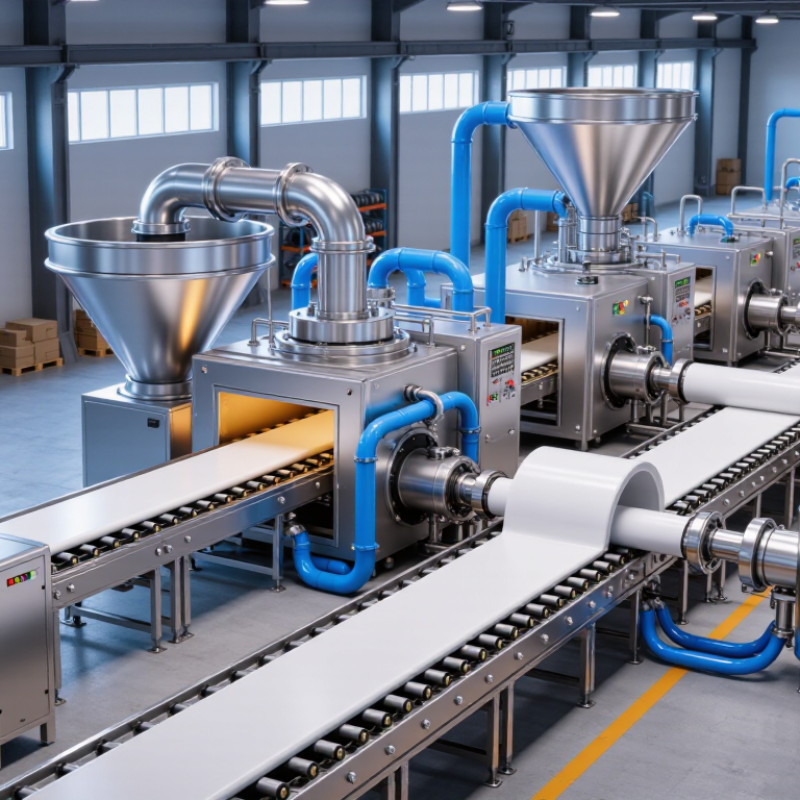
How to Choose a Plastic Pipe Extrusion Line?

Define the Pipe Specifications and Production Requirements

Before requesting quotations, define the pipe’s outside diameter, wall thickness, length, and intended use. State the pressure class or stiffness requirement, dimensional tolerances, and applicable product standard. A 110 mm drainage pipe and a 110 mm pressure pipe may need different wall thicknesses, testing, and downstream handling. Small details matter.

Name the resin grade and any required recycled-content percentage. The OECD’s Global Plastics Outlook (2022) estimated that only 9% of plastic waste was ultimately recycled in 2019. Recycled feedstock can vary in melt flow and contamination, so specify approved material inputs and quality checks rather than assuming every recycled resin runs alike. This point deserves care: a target percentage alone does not guarantee stable output.

Translate those specifications into production requirements: target kilograms per hour, operating hours per day, changeover frequency, and expected product mix. PlasticsEurope’s Plastics—The Fast Facts 2024 reported 413.8 million tonnes of global plastics production in 2023, but that broad figure cannot size an individual line. Ask suppliers to demonstrate output using your resin, diameter, and wall thickness. Check whether the haul-off, cooling tanks, calibration system, and saw can keep pace. A paper capacity number can look tidy; real production often exposes the weak link.

Match the Polymer with the Extrusion Process

Choosing a plastic pipe extrusion line starts with the polymer, not the machine’s advertised output. PVC is heat-sensitive, so stable temperature control and suitable screw design help limit degradation. Many rigid PVC lines use conical or parallel twin-screw extruders, though the right setup depends on the formulation. Small details count. Check how additives, fillers, and recycled content affect flow before settling on a configuration.

PE and PP generally need different processing conditions. A single-screw extruder is common for these materials, but screw geometry, melt pressure, and cooling capacity still matter. PE pipe may require careful control of melt strength and cooling to reduce sagging and dimensional variation. Hygroscopic polymers, such as some polyamides, may need drying before extrusion; moisture can cause bubbles or surface defects. Ask suppliers to run trials with your actual resin and target pipe size. A sample that looks fine at one speed may behave differently during a longer production run. It is easy to focus on throughput and overlook startup waste, calibration stability, or how quickly operators can correct a temperature drift. Those trade-offs deserve a closer look.

How to Choose a Plastic Pipe Extrusion Line

Match the polymer with an extrusion process that can maintain its required processing temperature and provide suitable melt control.

How to read this chart: The bars show indicative melt-processing temperature ranges in °C. Actual settings vary by resin grade, equipment, screw design, and operating conditions. PVC is heat-sensitive and often requires careful temperature control; confirm processing recommendations with the resin supplier when selecting a line.

Select the Line Capacity and Equipment Configuration

Line capacity should match the products you will actually run, not a brochure’s peak figure. Estimate output using pipe diameter, wall thickness, resin type, and planned operating hours. Thick-wall pipe consumes more material per meter, even when line speed looks modest. Check both kilograms per hour and finished meters per hour. Both matter.

Size the extruder, die, vacuum calibration tank, cooling tanks, haul-off, and cutter as one system. If the extruder pushes material faster than the tanks can cool it, output may become unstable. For small-diameter pipe, a compact tank and quick cutter can support frequent size changes. Large-diameter pipe needs stronger support, longer cooling, and room for handling. Not just a bigger motor.

Choose the screw and drive configuration for the resin and operating range. PVC and PE often need different processing setups, so confirm compatibility with a process engineer. Share common sizes, wall classes, changeover frequency, and target shifts when requesting a capacity figure. Ask for demonstrated output on comparable pipe, plus energy use and scrap rates. I would leave some headroom, but excessive capacity can mean poor operation at normal demand. That allowance is easy to misjudge. Recheck it against actual orders.

Assess Quality Controls, Automation, and Energy Use

A plastic pipe extrusion line should be judged by the consistency of its output, not just its rated speed. Ask how the line monitors melt temperature, screw pressure, haul-off speed, and cooling conditions. For polyethylene pipe, compare its inspection plan with ISO 4427 requirements, including dimensions and pressure-related properties. Request trial-run records showing wall-thickness variation and scrap rates. Look closely at the measuring method; a polished dashboard does not guarantee accurate readings.

Automation matters when it catches drift early. A stable gravimetric feeder, automatic diameter gauge, and documented alarm history can help operators spot changes before a long coil or pipe run is affected. Ask whether recipe settings and production data can be saved and reviewed. Small checks matter. Still, more automation is not automatically better if calibration and operator training are weak.

Energy use deserves a measured comparison. The U.S. Department of Energy’s 2014 U.S. Industrial Electric Motor Systems Market Opportunities Assessment reports that motor-driven systems use about 69% of electricity in U.S. manufacturing. That figure is not specific to extrusion, but it makes drive efficiency worth checking. Request actual kWh per kilogram from a comparable production trial, alongside output rate and scrap. The awkward part: one efficient run may not represent a full shift. Review several operating conditions, including startup and size changes.

How to Choose a Plastic Pipe Extrusion Line? - Assess Quality Controls, Automation, and Energy Use

Use these criteria to compare proposals under the same pipe dimensions, resin, output rate, and operating conditions. The sample targets below are illustrative buyer requirements, not universal industry specifications; confirm limits against the applicable product standard and your process.

Assessment area Metric or feature How to evaluate it Example acceptance check Weight
Quality control Outside diameter and ovality Check samples at a defined production speed using calibrated measuring equipment; review the measurement method and records. All measured samples meet the agreed product drawing and applicable standard. High
Quality control Wall thickness and circumferential variation Measure multiple points around the pipe and along the run; verify that the test covers start-up and steady-state production. Minimum and maximum readings remain within the agreed specification during the acceptance run. High
Quality control Start-up scrap and steady-state scrap Record rejected material by weight for a defined run, separating start-up losses from normal production losses. Compare measured scrap with a buyer-set limit under the agreed product and run conditions. High
Quality control Process and inspection records Check whether key settings, alarms, measured dimensions, and batch or production identifiers can be recorded and retrieved. Run records are available for the full acceptance test and can be exported in an agreed format. Medium
Automation Closed-loop control Identify which process variables are measured and automatically adjusted, such as haul-off speed, temperature, or wall-thickness control. Demonstrate stable operation and alarm behavior during a controlled change in operating conditions. High
Automation Recipe management and changeover Review how settings are stored, protected, recalled, and checked when changing pipe sizes or product recipes. A repeat changeover follows a documented procedure and produces pipe within the agreed acceptance limits. Medium
Automation Line speed and output Weigh saleable pipe over a timed run and record line speed, product dimensions, resin, and downtime. Measured saleable output meets the contracted rate while dimensions remain compliant. High
Energy use Specific electricity consumption Measure line electricity in kWh and divide by kilograms of saleable pipe produced over the same stable run. Compare kWh/kg for each proposal using the same product, resin, output, and measurement boundary. High
Energy use Power measurement boundary Confirm which loads are included, such as the extruder, drives, vacuum and cooling equipment, and downstream units. The supplier and buyer use the same meter boundary and define whether auxiliary equipment is included. Medium
Energy use Heating, drives, and cooling efficiency Review insulation, drive control, heater zoning, and cooling-water requirements; verify claims against measured operating data. Request actual power and water-use readings during the same acceptance run used for output and quality checks. Medium
Reliability and service Maintenance access and wear parts Inspect access to screws, barrels, screens, heaters, and downstream equipment; review recommended maintenance intervals and spare-parts lists. Confirm documented maintenance tasks, expected lead times, and operator training before acceptance. Medium

Comparison tip: Score each item against your production requirements, then compare total cost of ownership—including electricity, scrap, labor, maintenance, and expected uptime—rather than purchase price alone.

Compare Supplier Support, Costs, and Compliance

How to Choose a Plastic Pipe Extrusion Line?

Compare supplier support, costs, and compliance—not just quoted output. Ask who will commission the line, train operators, and troubleshoot defects after installation. Confirm response times, spare-part availability, and whether support covers the extruder, sizing tank, haul-off, and cutter. A technically strong machine can still lose production hours when a small component fails. Get these commitments in writing.

Compare the full operating cost, not only the purchase price. Request estimates for energy, cooling, tooling, routine maintenance, and likely changeover time. Ask suppliers to demonstrate pipe dimensions and output using your material and target specification. The OECD’s Global Plastics Outlook (2022) estimates that just 9% of plastic waste was recycled in 2019. That figure is a reminder: reducing startup scrap and unstable production matters. Still, quoted savings can be difficult to verify; request the assumptions behind them.

Check how the line supports applicable market requirements, including material traceability, dimensional checks, and documented quality tests. Confirm what records the controls can store and whether calibration procedures are provided. Requirements vary by product and destination, so have a qualified compliance professional review your specification.

Tips: Bring sample resin and a written pipe specification to supplier trials. Ask for actual test records, not only a presentation. Then compare support and lifecycle costs side by side.

FAQS

What information should I prepare before requesting a pipe extrusion line quotation?

Specify outside diameter, wall thickness, length, intended use, pressure class, tolerances, and required product standard. Include your resin grade and daily operating hours.

Why can pipes with the same diameter need different production setups?

A 110 mm drainage pipe and a 110 mm pressure pipe may need different wall thicknesses, tests, and handling. Diameter alone is not enough.

How should I check a line’s claimed output?

Ask for a production trial using your resin, pipe size, and wall thickness. Check whether cooling tanks, calibration, haul-off, and saw keep pace. Paper figures can mislead.

What should I consider when using recycled resin?

State the required recycled-content percentage and approved material inputs. Ask about melt-flow checks and contamination controls. A target percentage alone cannot ensure stable output.

Does the polymer affect the type of extruder I need?

Yes. PVC is heat-sensitive and often uses a twin-screw setup. PE and PP commonly use single-screw extruders, but screw design and cooling still matter.

What can cause PE pipe to sag or vary in size?

Melt strength and cooling control affect shape and dimensions. Ask suppliers how they manage these during a long production run, not just a brief sample.

Do some polymers need preparation before extrusion?

Yes. Some polyamides need drying because moisture can create bubbles or surface defects. Check the resin’s preparation requirements before production.

What should I watch during a production trial?

Look beyond peak speed. Check startup waste, calibration stability, and how quickly operators can correct temperature drift. I might be overlooking small changes, but they can matter.

Conclusion

Choosing a Plastic Pipe Extrusion Line starts with clearly defining the pipe’s material, diameter range, wall thickness, intended use, and expected production volume. These requirements help determine which polymer and extrusion process are suitable, since different materials call for different processing conditions and equipment. Buyers should then compare line capacity and configuration, including the extruder, die, cooling system, haul-off, and cutting equipment, to ensure the setup can meet current needs while allowing room for future growth.

A reliable selection also depends on consistent quality controls, practical automation, and efficient energy use. Review how the line monitors dimensions and process conditions, and consider whether its controls can simplify operation without compromising product consistency. Finally, assess the total cost of ownership, supplier training and service, spare-parts availability, and relevant product and workplace compliance requirements. Balancing these factors can help identify a line that delivers dependable production and long-term value.

Liam

Liam

Liam is a dedicated marketing professional with a profound expertise in the industry, where he excels at highlighting the unique advantages of our core products. With a keen understanding of market trends and consumer needs, Liam frequently updates our company’s professional blog, providing......