
What Are the Top PE Pipe Extrusion Line Types in 2026?

Time:2026-11-16 Author:Aria
0%

In 2026, choosing a Pe Pipe Extrusion Line is less about chasing the largest output figure and more about matching equipment to the pipe, material, and production plan. A compact line for small-diameter water or conduit pipe has different priorities from a system designed for large-diameter drainage pipe. Die design, screw configuration, cooling capacity, haul-off stability, and cutting accuracy all affect the finished product. Small details matter.

Common line types include single-layer systems, multi-layer co-extrusion lines, high-speed small-pipe lines, and large-diameter production lines. Single-layer setups can suit straightforward product ranges, while co-extrusion can support defined layer structures when the application requires them. High-speed equipment may raise output, but only if cooling and downstream handling keep pace. More speed is not always better.

This guide compares these configurations through practical questions: What pipe sizes will the plant make? How often will specifications change? Can operators maintain stable wall thickness and reliable dimensions across a full shift? Buyers should also review documented output conditions, energy use, changeover needs, service access, and the supplier’s technical support. Requesting a production trial with the intended resin and pipe specification can reveal issues that a brochure cannot. Even then, results depend on setup and operating conditions. There is no universal best line; the right choice balances product requirements, usable capacity, and room for future changes.
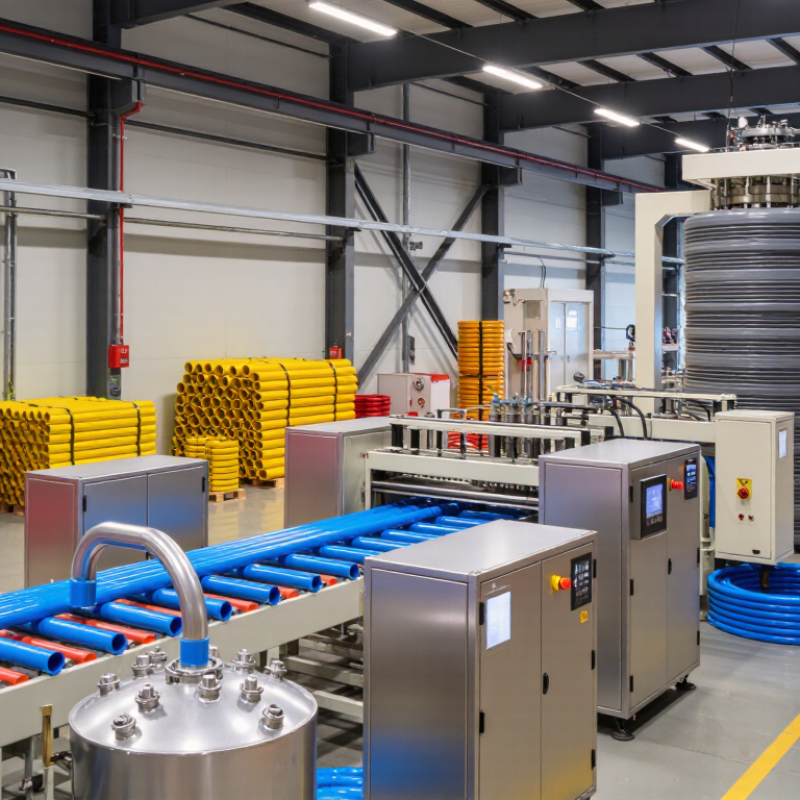
What Are the Top PE Pipe Extrusion Line Types in 2026?

How PE Pipe Extrusion Lines Are Classified

PE pipe extrusion lines are best classified by pipe diameter, wall construction, and production duty—not by one universal ranking. Small-diameter lines typically make coils for irrigation or service connections; larger lines produce straight lengths for water and gas networks. The difference is visible on the factory floor: a coiled-pipe line needs controlled winding, while a large-diameter line needs stable vacuum sizing, cooling, and haul-off. Small details matter.

A second split is single-layer versus multilayer extrusion. Single-layer lines suit standard solid-wall pipes. Co-extrusion lines add functional layers, such as a contrasting identification stripe or a barrier layer, when the pipe specification calls for it. Lines can also be grouped by output level, automation, and resin range. But “high output” alone is a weak buying measure; die design, cooling capacity, and dimensional control must match the target pipe.

Market figures help explain the range of equipment available. Grand View Research estimated the global plastic pipes market at USD 63.2 billion in 2023 and forecast 4.2% annual growth from 2024 to 2030. That market estimate is not a direct measure of extrusion-line sales, but it signals sustained demand across pipe applications. For a practical comparison, record the required diameter range, wall thickness, layer count, resin grade, and daily output before comparing line types. Specs can look neat on paper. Real production is less tidy.

What Are the Top PE Pipe Extrusion Line Types in 2026?

How PE Pipe Extrusion Lines Are Classified by Typical Pipe Diameter

PE pipe extrusion lines are commonly grouped by the pipe diameters they are designed to produce. The ranges shown are indicative market categories, not fixed industry limits; actual capabilities vary with line configuration, tooling, material, and applicable standards.

High-Speed Lines for Small- and Medium-Diameter Pipes

In 2026, high-speed PE pipe extrusion lines for small and medium diameters generally fall into single-layer and co-extrusion configurations. Single-layer lines suit standard pressure, irrigation, and utility pipes. Co-extrusion lines add a second material layer, such as a contrasting identification stripe. The right setup depends on pipe diameter, wall thickness, resin grade, and required output—not speed alone. Fast is not always better.

A typical line pairs a controlled-feed extruder with a vacuum sizing tank, cooling section, haul-off, and cutter. For small pipes, stable melt flow and accurate sizing help prevent ovality and uneven walls. Medium diameters need sufficient cooling capacity before cutting, especially at higher output rates. Watch the whole process. A faster extruder can create downstream bottlenecks if the tank or haul-off cannot keep pace. In practice, line tuning takes time, and a setting that works for one resin may not suit another.

Tips: Check wall-thickness consistency at several points around the pipe. Record melt temperature, haul-off speed, and cooling conditions during trials. Small adjustments matter. Leave room for testing; ideal settings are rarely perfect on the first run.

Large-Diameter Lines for Water and Gas Pipes

Large-diameter PE pipe extrusion lines serve water transmission and gas distribution projects where consistent wall thickness matters. Lines for pipes around 630 mm and above commonly use high-output single-screw extruders, vacuum sizing tanks, spray cooling, and heavy-duty haul-offs. Exact diameter ranges vary by market. For very large pipes, stable melt temperature and careful cooling help limit ovality and residual stress. These details matter when long pipe sections must connect cleanly on site.

Demand is tied to aging infrastructure, but the figures need context. The U.S. Environmental Protection Agency’s 2023 Drinking Water Infrastructure Needs Survey estimated $625 billion in drinking-water infrastructure needs over 20 years. That estimate covers more than pipe, so it should not be read as a direct sales forecast. For gas applications, buyers should check that the line supports the specified resin, pressure class, and applicable pipe standards. Output rate alone is a weak selection metric. A line that runs fast but struggles to hold dimensions may create costly scrap.

Tips: Ask suppliers for measured output at your target diameter and wall thickness, not just maximum capacity. Review sample pipe for roundness and wall-thickness variation. A practical detail: allow enough floor space for cooling and handling. It is easy to underestimate.

Multilayer and Co-Extrusion Lines for Specialized Applications

Multilayer PE pipe extrusion lines combine separate material streams in one die. Each layer can serve a specific purpose. A tough outer layer can resist abrasion, while an inner layer supports steady flow. In specialized designs, a functional middle layer may add color, improve chemical resistance, or separate materials with different properties. That matters.

Co-extrusion depends on careful control, not just extra extruders. Operators monitor melt temperature, screw speed, output balance, and layer thickness. A small output mismatch can leave one layer uneven, especially during startup or a diameter change. The pipe may look sound outside, yet its structure can vary along the length. Samples and consistent process records help catch this early.

The right line depends on the pipe’s service conditions. Irrigation, industrial transport, and protective conduit can call for different layer structures and material choices. Compatibility between adjacent polymers also needs testing; poor bonding can weaken the pipe. Still, more layers are not automatically better. They add process complexity, and the benefit should be measurable. In practice, a simpler structure may be easier to control. Engineers should verify performance against the intended application rather than assume a multilayer design guarantees longer service life.

How to Compare PE Pipe Line Types for 2026 Projects

For a 2026 project, compare PE pipe extrusion lines by pipe range, output, material structure, and available floor space. A standard single-screw line can suit steady production of single-layer pipes across a defined diameter range. Large-diameter lines need more than a powerful extruder: consider die capacity, haul-off grip, and cooling length. Otherwise, a fast extruder may simply push the bottleneck downstream.

Multi-layer lines offer options for color coding or functional layers, but add dosing, calibration, and process-control demands. High-speed lines can improve output on repeat orders, yet frequent product changes may reduce that advantage. Check whether the line can maintain wall thickness at your actual resin grades and target speeds. Ask for a trial using representative material, not just a polished demonstration. Small details matter. Watch the pipe leave the cooling tank: is it round, stable, and easy to handle?

Compare energy use, changeover time, operator access, and maintenance intervals alongside purchase cost. A compact line may fit the workshop but leave little room for downstream equipment. A detailed spreadsheet helps, though it can still miss awkward access around a saw or cooling trough. Record those practical constraints before choosing a configuration.

FAQS

How are PE pipe extrusion lines commonly classified?

They are grouped by pipe diameter, wall construction, and production duty. Small lines often make coils, while large lines produce straight lengths.

What is the difference between single-layer and multilayer lines?

Single-layer lines produce solid-wall pipe. Multilayer lines add layers for features such as identification stripes or barriers, when specified.

What should I compare when choosing a line for a 2026 project?

Compare diameter range, output, material structure, resin grades, and floor space. Also check wall-thickness control at your target speed.

Why is high output not enough to judge a line?

The die, cooling capacity, and dimensional controls must match the pipe. Otherwise, production may bottleneck after the extruder.

What details matter for large-diameter production?

Check die capacity, haul-off grip, vacuum sizing, and cooling length. The pipe should stay round and stable.

When can a high-speed line improve production?

It can help with repeat orders and steady product runs. Frequent changes may reduce the benefit. Small details matter.

What should a production trial include?

Use representative resin and target settings. Watch the pipe leave the cooling tank, then check its shape and handling.

Which practical costs and constraints are easy to overlook?

Compare energy use, changeover time, operator access, and maintenance intervals. A spreadsheet can still miss awkward access around a saw or cooling trough.

Conclusion

In 2026, PE pipe extrusion lines can be grouped by pipe diameter, production speed, and layer configuration. High-speed lines are suited to small- and medium-diameter pipes, where consistent output and efficient operation are priorities. Large-diameter lines are designed for water and gas pipe production, with equipment configured to handle bigger dimensions and demanding manufacturing requirements. Multilayer and co-extrusion lines make it possible to combine different material layers for specialized applications.

Choosing a Pe Pipe Extrusion Line starts with matching the system to the project’s pipe specifications and expected production volume. Compare the diameter range, output capacity, layer requirements, process control, and flexibility for future needs. Considering these factors together helps manufacturers identify a line that fits their intended applications and production goals.

Aria

Aria

Aria is a dedicated marketing professional with a deep passion for innovative strategies and a keen understanding of our company's product offerings. With a wealth of experience in the industry, Aria excels at crafting engaging content that highlights the unique features and benefits of our......