
Choosing a Plastic Profile Extrusion Machine is a production decision, not just a purchase. The right line must hold dimensions steady, manage melt flow, and run reliably across long shifts. Small details matter: die temperature, screw design, cooling calibration, and how quickly operators can change profiles. This guide examines ten manufacturers through those practical considerations.
The broader plastics market gives useful context. The OECD’s Global Plastics Outlook reports that worldwide plastics production rose from 234 million tonnes in 2000 to 460 million tonnes in 2019. That growth does not translate directly into demand for extrusion equipment, but it shows why efficient processing and consistent product quality matter. Every machine still needs evaluation against the actual resin, profile geometry, output target, and service support a plant requires. A catalog specification alone is not enough.
Extrusion specialist Chris Rauwendaal has written extensively on polymer extrusion and process engineering. His published work underscores the importance of understanding material behavior and controlling the process—not simply maximizing output. This is a paraphrase of his technical focus, not a direct quotation; no authenticated verbatim statement was available in the supplied material. A reliable comparison should therefore look beyond headline capacity. Ask manufacturers for application references, trial data, achievable tolerances, energy figures, and clear maintenance requirements. The strongest choice may not be the fastest line. It may be the one that produces a clean, stable profile day after day.
Plastic profile extrusion starts with choosing a material that suits the part’s job. PVC is often used for rigid trim, while polyethylene and polypropylene offer flexibility and chemical resistance. ABS can provide a tough surface, and thermoplastic elastomers support softer seals. Additives affect color, weathering, and processing behavior, so the recipe matters. Small changes show.
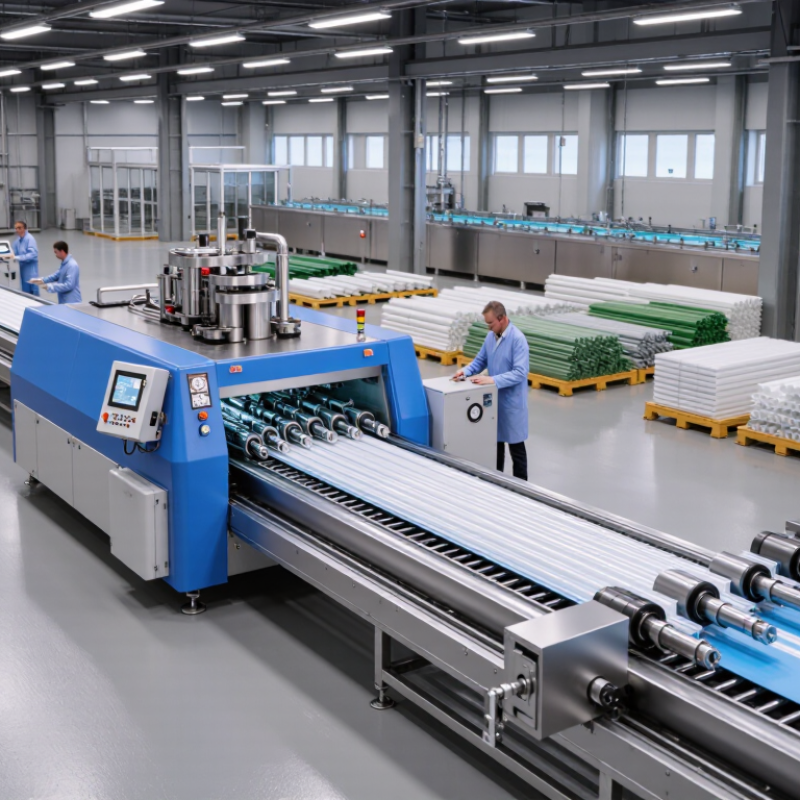
In the machine, pellets are fed into a heated barrel and moved forward by a rotating screw. The melt passes through a shaped die, then enters calibration tooling that helps hold its dimensions. Cooling tanks or air systems set the profile before a haul-off unit pulls it steadily toward a cutter. Operators monitor melt temperature, line speed, and cooling because uneven settings can cause bowing or rough edges. A clean-looking profile may still hide internal stress.
Machine types vary with material and product complexity. Single-screw lines handle many common profiles; twin-screw designs can suit materials needing more intensive mixing. Co-extrusion systems combine layers, such as a rigid core with a softer surface. Choosing between them depends on output, tolerance needs, and tooling costs. The trade-off is not always obvious. A trial run can reveal practical issues that specifications miss.
Top 10 Plastic Profile Extrusion Machine Manufacturers
Comparing manufacturers starts with three numbers: output in kg/h, screw diameter in mm, and line speed in m/min. These figures are useful only when test conditions match. A thick, rigid window profile may run far slower than a narrow trim, even on the same line.
For a practical comparison, request output data for the intended resin and profile. Many general-purpose profile lines use screws around 45–90 mm, with output roughly 40–250 kg/h. Treat these as screening ranges, not guarantees. Ask whether output was measured continuously, and check for stable dimensions, smooth surfaces, and consistent melt temperature. Screw diameter alone does not predict capacity; screw design, motor power, and cooling matter too.
Line speed needs context. A small profile might run several metres per minute, while a large hollow section may require a slower haul-off. Faster is not automatically better. A useful benchmark includes the finished profile’s dimensions and weight per metre. It is easy to overlook that detail.
Tips: Compare like with like. Request a recorded trial using your material, tooling, and target profile. Check actual output and speed together.
PVC profile extrusion depends on controlled melt temperature, not merely a machine’s advertised output. In most production trials, PVC compounds process around 160–200°C. The suitable point depends on resin grade, plasticizer level, fillers, and stabilizer package. A rigid window profile may need different settings from a flexible sealing strip.
The displayed barrel temperature is only a reference. Melt temperature should be checked near the die with a calibrated probe. A practical setup may use gradually increasing barrel zones, with a slightly cooler feed zone to prevent bridging. Keep the die stable. Sudden heat changes can create rough surfaces, yellowing, or dimensional drift. Excessive shear can raise the actual melt temperature, even when the controller appears normal. Watch the surface closely. It often reveals problems before the gauge does.
Experienced operators also check residence time, screw speed, vacuum calibration, and cooling-water flow. A profile exiting at 185°C may still warp if cooling is uneven. Clean vent areas matter because trapped volatiles can mark the profile. I have seen teams adjust die temperature while ignoring worn screw components. That was a costly distraction. Machine evaluations should include temperature-control accuracy, melt-pressure stability, and technical service, not just rated capacity. Trial data often reveals the real difference.
| No. | Machine Configuration | Recommended PVC Profile Type | Screw Design | Typical Screw Diameter | Typical Output Range | Typical Melt Temperature | Key Processing Features |
|---|---|---|---|---|---|---|---|
| 1 | High-torque conical twin-screw profile line | Window frames, door frames, and rigid construction profiles | Intermeshing conical twin screw with metering section | 50/105–65/132 mm | 120–350 kg/h | 170–190°C | Strong premixing, efficient degassing, and stable feeding of calcium-carbonate-filled PVC compounds. |
| 2 | Parallel twin-screw profile extrusion line | Large hollow profiles and technically demanding rigid sections | Intermeshing parallel twin screw with adjustable processing zones | 65–92 mm | 180–500 kg/h | 175–195°C | Provides a longer processing length and high throughput for continuous industrial production. |
| 3 | Single-screw precision extrusion line | Small rigid trims, edge profiles, and cable-management sections | Barrier or Maddock-type single screw | 45–75 mm | 25–160 kg/h | 160–185°C | Suitable for clean, pre-compounded PVC materials and applications requiring straightforward operation. |
| 4 | Co-extrusion profile line | Hard-soft sealing profiles and multilayer decorative sections | Primary rigid-PVC extruder with secondary material extruder | 35–65 mm | 30–180 kg/h | 165–195°C | Combines two PVC formulations in one profile, such as rigid structural material with a flexible sealing layer. |
| 5 | High-speed small-profile extrusion line | Furniture edging, electrical trunking, and compact decorative profiles | High-speed single screw with optimized cooling and calibration | 30–60 mm | 15–90 kg/h | 160–180°C | Designed for rapid line speeds, precise sizing, and short cooling distances. |
| 6 | Foamed PVC profile extrusion line | Celuka boards, lightweight trims, and low-density decorative profiles | Low-shear twin screw with controlled gas-release section | 51/105–65/132 mm | 80–280 kg/h | 165–185°C | Uses controlled foaming and cooling to reduce density while maintaining surface quality and dimensional stability. |
| 7 | Recycled-PVC profile extrusion line | Utility channels, protective profiles, and non-critical construction sections | Wear-resistant twin screw with filtration and melt-pressure monitoring | 55/110–80/156 mm | 100–320 kg/h | 170–195°C | Configured for variable feedstock quality, contamination control, and consistent melt filtration. |
| 8 | Precision calibration profile line | Medical, technical, and tight-tolerance rigid PVC profiles | Low-pulsation screw with closed-loop temperature control | 35–65 mm | 20–120 kg/h | 160–180°C | Emphasizes accurate melt control, vacuum calibration, dimensional monitoring, and stable haul-off speed. |
| 9 | Multi-strand profile extrusion line | Small tubing, wire ducts, and repeated compact profiles | Single extruder with multi-cavity die or parallel die outlets | 40–75 mm | 40–200 kg/h | 165–185°C | Improves productivity by producing multiple identical profiles from one extrusion system. |
| 10 | Heavy-duty rigid-profile extrusion line | Reinforced construction sections and thick-wall industrial profiles | High-output conical twin screw with intensive cooling capacity | 65/132–80/156 mm | 220–600 kg/h | 180–200°C | Built for high material loading, thick-wall profiles, robust downstream equipment, and continuous production. |
| Temperature ranges are typical processing references for rigid PVC profile extrusion. Actual melt temperature depends on formulation, stabilizer package, filler content, screw design, residence time, shear rate, and die geometry. | |||||||
A credible top-10 comparison should examine engineering depth, not brochure language. Grand View Research estimates that the global plastic extrusion market will continue expanding through 2030, driven by construction, automotive, and packaging demand. PlasticsEurope reported global plastics production of about 400.3 million tonnes in 2022. These figures show why stable profile production matters.
Leading manufacturers usually offer complete extrusion lines, including twin-screw or single-screw extruders, calibrated dies, cooling tanks, haul-offs, cutters, and automatic stacking units. Their strongest capability is process control. Modern systems monitor melt pressure, temperature, line speed, and dimensional tolerance in real time. Some suppliers also provide recipe storage, remote diagnostics, and energy-use tracking. Useful details matter here: a window profile line may need steady cooling, while a rigid technical profile demands tighter die control.
Material flexibility separates serious suppliers from average ones. The best-performing manufacturers support PVC, PE, ABS, PP, and engineering polymers with tailored screw designs and die technologies. They also provide laboratory trials, operator training, spare-parts planning, and regional service coverage. According to the European Plastics Converters’ 2023 industry data, energy and raw-material costs remain major business pressures. Efficient motors and shorter start-up times therefore affect the purchase decision.
The ranking is not absolute. Published output claims can be difficult to verify. Buyers should request test samples, measured energy data, tolerance records, and references from comparable applications. A technically impressive machine may still disappoint if service response is slow. That is the uncomfortable detail.
A plastic profile extrusion machine can look impressive in a showroom and still struggle with a customer’s exact profile. Compare suppliers by examining tooling, automation, standards, and service together. Ask how the die is designed for your material, dimensions, and expected output. Request sample profiles with measured wall thickness and corner details. A clean sample matters. So does repeatability across a full production run.
Automation should fit the work, not just add screens and sensors. Check how operators adjust temperature, haul-off speed, and cutting length, and whether alarms identify practical causes. Ask for a trial using your resin and production settings. For standards, request documented inspection procedures, calibration records, and clear acceptance criteria. Verify what is included in the quotation: tooling changes, commissioning, training, and spare parts. These details can shift the real cost.
Tips: Bring a drawing, target tolerances, and an estimated annual volume to supplier discussions. Ask for tooling lead times and examples of service response procedures. Clarify who handles die corrections after trial runs. Small details get missed, even by experienced teams; build time for adjustments into your project plan.
PVC suits rigid trim and window profiles. Polyethylene and polypropylene offer flexibility and chemical resistance. ABS provides a tough surface. Thermoplastic elastomers support softer seals. Small changes matter. Additives influence color, weathering, and processing behavior.
Pellets enter a heated barrel and move forward on a rotating screw. The melted material passes through a shaped die. Calibration tooling then helps maintain dimensions. Cooling tanks or air systems set the profile. A haul-off pulls it steadily toward the cutter.
Uneven settings can cause bowing, rough edges, or dimensional drift. A profile may look smooth while hiding internal stress. Cooling-water flow matters. The final shape is not always stable immediately.
Compare output in kilograms per hour, screw diameter, and line speed. These numbers only help when test conditions match. A thick window profile runs slower than narrow trim. Request data using your resin, tooling, and target profile. Generic figures can mislead.
Many general-purpose lines use screws around 45–90 millimeters. Typical output may range from about 40–250 kilograms per hour. Treat this as a screening range, not a promise. Screw diameter alone does not predict capacity.
A narrow profile may run several metres per minute. Large hollow sections usually need slower haul-off speeds. Faster is not automatically better. Check profile dimensions and weight per metre. A recorded trial is more useful than a brochure number.
Single-screw lines handle many common profiles. Twin-screw designs may suit materials needing stronger mixing. Co-extrusion systems combine layers, such as a rigid core and softer surface. The choice depends on output, tolerances, material behavior, and tooling cost. The trade-off can be unclear.
PVC compounds often process around 160–200°C. The correct point depends on resin grade and additives. Check melt temperature near the die with a calibrated probe. Barrel readings are only references. Sudden heat changes may cause rough surfaces or yellowing. Excessive shear can raise the real temperature. Watch the surface closely. Gauges can be wrong.
Monitor residence time, screw speed, vacuum calibration, and cooling-water flow. Keep the die stable and clean vent areas to reduce surface marks. Inspect melt-pressure stability and temperature-control accuracy. Do not focus only on rated capacity. I have seen teams adjust die temperature while ignoring worn screw parts. That was a costly distraction.
This guide explains how plastic profile extrusion turns materials such as PVC and other thermoplastics into continuous shapes through feeding, melting, shaping, cooling, and cutting. It outlines the main machine types and the benchmarks buyers can use to assess production needs, including output in kilograms per hour, screw diameter in millimeters, and line speed in meters per minute. For PVC profile processing, typical melt temperatures are approximately 160–200°C, though suitable settings depend on the material formulation and production conditions.
The overview of the top 10 Plastic Profile Extrusion Machine manufacturers focuses on capabilities rather than brand names. It also provides a practical framework for comparing suppliers, covering tooling design, automation options, relevant quality standards, technical support, and after-sales service. Together, these topics help readers evaluate equipment for product requirements, production targets, and long-term operating needs.
