
China Top Professional Extrusion Manufacturers?

Time:2026-10-14 Author:Sophia
0%

China has become a major sourcing base for advanced extrusion equipment, but choosing a reliable manufacturer requires more than comparing prices. This guide examines China’s top Professional Extrusion manufacturers through practical and technical criteria. These include screw design, temperature control, material compatibility, output stability, automation, and after-sales support.

Chris Rauwendaal, a respected polymer-extrusion expert and author, has stated, “The extruder is the heart of the extrusion line.” That principle remains important today. A strong machine should melt materials evenly, maintain stable pressure, and produce consistent profiles from the first meter to the last. Buyers should inspect factory testing records, component brands, quality-control procedures, and real customer applications. Stainless-steel contact surfaces, calibrated sensors, and clean wiring are small details. They often reveal manufacturing discipline.

Performance matters most.

However, no ranking can fit every production need. A manufacturer serving PVC window profiles may not be ideal for medical tubing, packaging film, or recycled compounds. This is where many comparisons become too simple. They may overlook operator training, spare-parts availability, installation conditions, and local technical support. Buyers should request sample runs and review measurable results, including throughput, dimensional tolerance, energy use, and rejected-product rates.

This overview aims to provide a balanced starting point. It recognizes China’s engineering progress while acknowledging uneven quality across suppliers. Careful verification is still necessary. A polished showroom cannot replace a stable production line, documented testing, and responsive technical service.
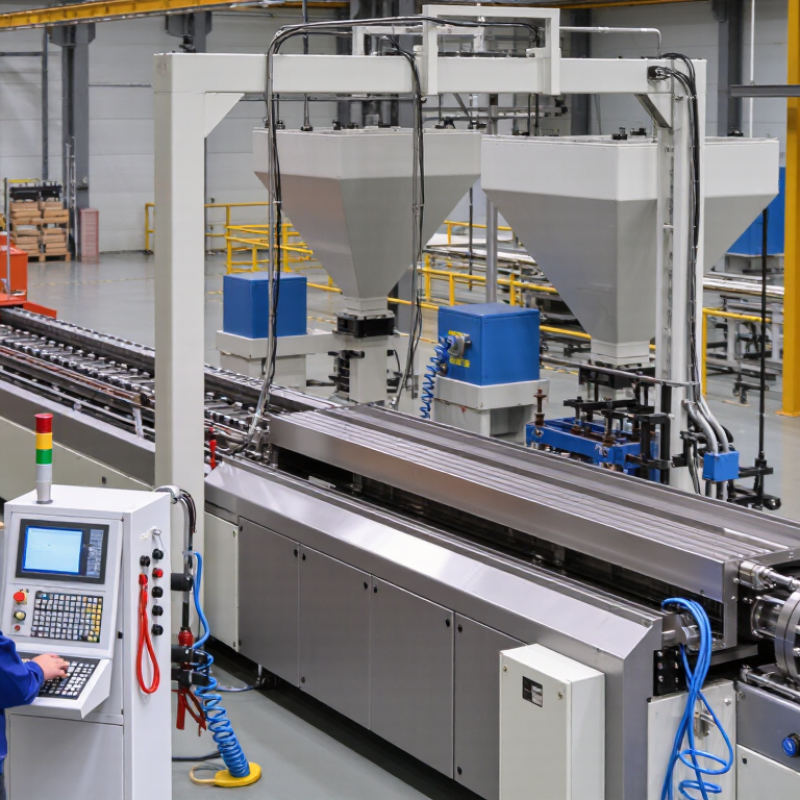
China Top Professional Extrusion Manufacturers?

Definition and Role of Professional Extrusion Manufacturers in China

China Top Professional Extrusion Manufacturers?

Definition and Role of Professional Extrusion Manufacturers in China

Professional extrusion manufacturers in China convert heated metal or polymer materials into precise, continuous profiles. Their work supports construction, transportation, electronics, machinery, and many industrial applications. The process typically involves material preparation, controlled heating, die forming, cooling, cutting, and dimensional inspection. Each stage affects the final profile.

An experienced manufacturer does more than operate extrusion presses. Engineers review drawings, alloy requirements, tolerances, surface conditions, and expected usage before production begins. In a well-managed workshop, technicians monitor temperature, pressure, line speed, and cooling time. Samples may receive hardness tests, coating checks, and measurements from calibrated tools. Clear batch records also improve traceability when an issue appears later.

Reliable suppliers usually provide process documentation, inspection reports, and realistic production schedules. They should explain limitations instead of promising every result. No workshop is flawless. Even stable processes can produce slight color variation, die wear, or dimensional changes. This is where honest communication matters. Buyers still need to verify samples, tolerances, packaging, and quality controls independently. A professional extrusion manufacturer is therefore a technical partner, not simply a low-cost production source. Their value appears in repeatability, practical engineering support, and responsible responses when conditions change.

Key Extrusion Processes and Product Categories

China’s professional extrusion manufacturers serve a broad field, from construction profiles to food-grade films and industrial tubing. Their value depends on process control, not only machine capacity. Direct aluminum extrusion pushes a heated billet through a die, creating window frames, heat sinks, and structural rails. Indirect extrusion can reduce friction and improve dimensional consistency for demanding sections.

Plastic extrusion follows different requirements. Single-screw lines commonly produce pipes, sheets, and simple profiles. Twin-screw systems offer stronger mixing for filled or recycled compounds. Film extrusion adds precise cooling, tension control, and thickness monitoring. PlasticsEurope reported global plastics production of about 414 million tonnes in 2023, increasing pressure for efficient material use and traceable recycled content. That figure does not mean every extrusion line can process recycled feedstock reliably. Moisture, contamination, and unstable melt flow remain practical problems.

Product categories reveal manufacturing expertise. Thin-wall tubing needs stable pressure and accurate sizing. Large profiles require controlled die temperature and careful cooling to prevent warping. The International Aluminium Institute reported global primary aluminum production above 70 million tonnes in 2023, supporting continued demand for lightweight extruded components. Yet material volume alone is a weak quality indicator. The better questions concern tensile testing, surface inspection, die maintenance, and batch records. Reports from the International Organization for Standardization also stress documented quality systems, but documentation can become mechanical. Experienced engineers still need to inspect the first meter of every run.

How to Evaluate China’s Top Extrusion Manufacturers

China Top Professional Extrusion Manufacturers?

Evaluating China’s top extrusion manufacturers requires more than comparing quotations. Review their production experience with your material, profile shape, wall thickness, and expected tolerances. A capable factory should explain die design, billet selection, extrusion temperature, and surface treatment clearly. Ask for recent inspection records, not only polished product photographs. Details matter.

During a factory assessment, inspect the extrusion press, die workshop, aging ovens, and measuring equipment. Check whether operators record temperature, speed, pressure, and dimensional results for each batch. Request samples from normal production, including cut ends and finished surfaces. Test hardness, straightness, coating thickness, and chemical composition through qualified laboratories when necessary. Reliable manufacturers also provide traceable batch numbers and practical corrective-action reports.

Price still matters, but an unusually low quote may hide weak tooling control or inconsistent raw materials. I have learned that fast replies do not always indicate strong engineering support. Ask how the team handles a die revision, delayed shipment, or nonconforming profile. Their answer can reveal more than a sales presentation. Communication quality should be measured over several weeks. A factory may look impressive during one visit, yet daily control can remain uneven. Evaluate capacity, quality systems, worker training, export documentation, and after-sales responsibility together. Choose evidence over promises.

China Top Professional Extrusion Manufacturers? How to Evaluate China’s Top Extrusion Manufacturers

A practical, brand-neutral evaluation model for comparing professional extrusion manufacturers. The scores represent recommended decision weights rather than data from any individual company.

Quality systems and process control should be verified through certifications, inspection records, sample approvals, production audits, and traceability documents. Capacity, tooling capability, delivery performance, sustainability, and total cost should be assessed against the buyer’s project requirements.

Quality Standards, Technology, and Production Capabilities

China’s top professional extrusion manufacturers are judged by more than equipment size. Quality standards, process control, and production discipline matter daily. The ISO Survey 2023 recorded more than 1.26 million ISO 9001 certificates worldwide. This figure shows why documented quality systems remain a practical buyer requirement.

Experienced factories usually control resin drying, melt temperature, screw speed, and cooling conditions through digital records. Operators inspect wall thickness with gauges and verify dimensions against approved drawings. For aluminum profiles, tensile strength, surface finish, and dimensional tolerance require separate checks. Plastics Europe reported global plastic production at about 413.8 million tonnes in 2023. That scale increases pressure on stable output, traceability, and material efficiency. Small process deviations can create large waste.

Production capability should include laboratory testing, preventive maintenance, and backup tooling. A capable supplier can provide batch records, inspection reports, and corrective-action evidence. It should also explain its limits clearly. No factory is flawless. Overstated tolerances deserve questions. Production speed is not quality proof. In my experience, the strongest assessment combines a factory audit, sample approval, and a monitored trial order. ASTM and ISO test methods can support reliable comparisons, but they cannot replace hands-on verification. Reflection is necessary: a modern line may still produce inconsistent profiles when operators ignore cooling balance or calibration wear.

China Top Professional Extrusion Manufacturers? - Quality Standards, Technology, and Production Capabilities
Evaluation Dimension Professional Industry Benchmark Relevant Standards or Practices Typical Production Capability Recommended Verification Evidence
Quality Management Certified system expected ISO 9001 quality-management principles, documented procedures, internal audits, corrective-action records Controlled purchasing, incoming inspection, in-process inspection, final inspection, and traceable quality records Valid certificate, certification scope, audit history, quality manual, and sample inspection reports
Environmental Management Structured environmental controls ISO 14001 principles; legal compliance for emissions, waste, water, and energy management Waste segregation, recycling procedures, energy monitoring, and documented environmental objectives Environmental certificate, local compliance records, waste-disposal documentation, and energy data
Occupational Safety Formal safety-management procedures ISO 45001 principles, machine guarding, lockout/tagout, operator training, and emergency procedures Risk assessments for extrusion lines, scheduled equipment inspections, personal protective equipment, and training records Safety certificate, risk-assessment files, training logs, and equipment maintenance records
Material Control Full batch traceability Material certificates, supplier approval, identification control, and documented batch management Traceability from resin, billet, powder, or compound lot through production and shipment Material test certificates, batch labels, supplier evaluation records, and traceability samples
Extrusion Processes Process matched to application Hot extrusion, cold extrusion, profile extrusion, sheet extrusion, tube extrusion, or composite extrusion as required Production parameters controlled for temperature, pressure, speed, cooling, die alignment, and dimensional stability Process-flow chart, equipment list, production records, and representative trial-run documentation
Dimensional Accuracy Application-specific tolerance control Approved technical drawings, GD&T where applicable, calibrated measuring equipment, and inspection plans In-line measurement, sampling frequency defined by risk, and corrective adjustment of dies or process settings Inspection plan, calibration certificates, capability studies, and dimensional inspection reports
Tooling and Die Engineering In-house or controlled tooling capability Design review, die-flow analysis, revision control, preventive die maintenance, and trial approval Die design, machining, polishing, repair, trial extrusion, and controlled modification of tooling Tooling drawings, die-maintenance records, trial reports, and approved first-article samples
Production Equipment Modern, maintained extrusion lines Equipment qualification, preventive maintenance, calibration, and process-parameter logging Typical lines may include billet heaters, extrusion presses, haul-off units, cooling systems, cutters, ovens, and finishing equipment Equipment register, rated capacity, maintenance schedule, calibration records, and factory photographs or video
Surface Treatment Controlled finishing process Cleaning, pretreatment, coating, anodizing, plating, polishing, or protective-film procedures matched to the material Defined film-thickness control, color or gloss checks, adhesion testing, corrosion evaluation, and appearance inspection Process specifications, coating or treatment test reports, sample panels, and approved appearance standards
Mechanical Testing Testing based on material and end use Tensile, yield-strength, elongation, hardness, impact, or compression testing according to the applicable material specification Internal laboratory or qualified third-party testing with controlled sampling and recorded test conditions Laboratory accreditation where applicable, test-machine calibration, material reports, and batch test results
Production Capacity Capacity demonstrated by equipment and scheduling Capacity should be stated by product type, alloy or polymer family, profile size, weight, and shift pattern Professional suppliers normally provide line-specific capacity rather than one generalized factory figure Line list, monthly output records, utilization data, production schedule, and capacity plan for the requested product
Automation and Data Control Digital monitoring preferred PLC-based control, electronic production records, barcode or batch identification, and controlled data backup Real-time monitoring of temperature, pressure, speed, energy use, alarms, and downtime System screenshots, sample production records, traceability demonstration, and data-retention policy
Product Development Engineering support from design to validation Design review, manufacturability assessment, prototype approval, first-article inspection, and engineering-change control Support for material selection, die design, process trials, tolerance review, packaging, and production ramp-up Project case records, engineering drawings, prototype reports, and first-article approval documents
Inspection and Testing Coverage Multi-stage inspection Incoming, first-piece, in-process, final, and pre-shipment inspection according to customer risk level Visual, dimensional, surface, chemical, mechanical, and functional checks as specified in the purchase requirements Inspection checklist, control plan, nonconformance records, and certificate-of-conformity template
Delivery and Export Readiness Documented logistics control Export packaging, commercial documentation, product labeling, container loading control, and Incoterms alignment Protective packaging designed to prevent deformation, corrosion, scratches, and moisture damage during transport Packing specification, loading photographs, shipping documents, and sample packaging approval
Sustainability Performance Measurable resource efficiency Energy-efficiency programs, scrap recovery, recycled-content control, and responsible material sourcing Process scrap segregation, closed-loop recycling where technically suitable, and reduction of material loss Energy records, recycling data, recycled-content declarations, and sustainability objectives
Customer Support Responsive technical and quality communication Defined quotation, sample approval, complaint handling, root-cause analysis, and corrective-action process Dedicated project contact, technical clarification, production updates, and after-sales quality response Communication procedure, response-time commitment, corrective-action examples, and customer-service workflow

Major Industries Served by Chinese Extrusion Manufacturers

Chinese extrusion manufacturers serve a wide industrial base, with construction remaining a major demand center. Aluminum profiles appear in curtain walls, window frames, thermal-break systems, and modular interiors. The International Aluminium Institute reports that global primary aluminum demand exceeded 100 million tonnes in 2023, reflecting sustained use in infrastructure and transport. Chinese suppliers increasingly combine die design, aging treatment, machining, and surface finishing in one production chain.

Automotive production is another important sector. The International Energy Agency recorded more than eight million electric car sales in China during 2023, representing about 60% of global electric car sales. Extruded aluminum supports battery trays, crash-management parts, heat-transfer structures, and lightweight body components. Dimensional accuracy matters here. A small profile deviation can complicate assembly or thermal control. Factory experience helps, but testing records matter more.

Renewable energy adds a fast-growing application area. According to the IEA’s Renewables 2024 report, China contributed nearly 60% of global renewable capacity additions in 2023. Extrusions are used in solar mounting rails, inverter frames, and wind-power equipment. Electronics, rail transit, industrial automation, and heat sinks also require tight tolerances and stable alloys. Report figures vary because some studies count finished profiles, while others measure raw aluminum. That limitation deserves attention. A credible manufacturer should provide alloy certificates, tensile results, dimensional reports, and traceable inspection data. Capability is not proven by production volume alone.

FAQS

What does a professional extrusion manufacturer do?

It converts heated metal or polymer into continuous profiles with controlled dimensions. The process includes heating, die forming, cooling, cutting, and inspection. Details matter.

Which industries use extruded profiles?

Extruded profiles support construction, transportation, electronics, machinery, and other industrial applications. Their shapes may include channels, frames, tubes, or custom sections.

How should buyers evaluate an extrusion manufacturer?

Review experience with your material, profile shape, wall thickness, and required tolerances. Request recent inspection records and production samples. Photos are not enough.

What factory equipment should be inspected?

Check the extrusion press, die workshop, aging ovens, and measuring equipment. Ask whether workers record temperature, pressure, speed, and cooling conditions.

Which quality tests may be necessary?

Common checks include hardness, straightness, coating thickness, dimensions, and chemical composition. Qualified laboratories may help verify important material properties.

Why are batch records important?

Traceable batch numbers connect materials, process settings, inspection results, and corrective actions. They help identify problems when a profile fails later.

Is the lowest quotation usually the best choice?

Not always. A very low price may reflect weak tooling control or inconsistent raw materials. Cost matters, but repeatability matters more.

How can buyers judge engineering support?

Ask how the team handles die revisions, delayed shipments, or nonconforming profiles. Clear answers reveal practical capability. Fast replies alone prove little.

Can a factory guarantee completely flawless extrusion results?

No workshop is flawless. Slight color variation, die wear, or dimensional changes can still occur. Buyers should verify samples, tolerances, packaging, and quality controls independently.

Conclusion

China’s Professional Extrusion manufacturers play an important role in transforming raw materials into precise, durable, and application-ready profiles, tubes, sheets, films, and customized components. Their expertise covers aluminum, plastic, rubber, and other common materials, using processes such as profile extrusion, pipe extrusion, sheet extrusion, film extrusion, and co-extrusion. These manufacturers support customers from material selection and mold design to production, finishing, inspection, and delivery.

When evaluating China’s top extrusion manufacturers, buyers should consider technical experience, equipment quality, production capacity, dimensional accuracy, material consistency, customization capabilities, and communication efficiency. Reliable suppliers should also demonstrate appropriate quality management systems, advanced process controls, traceable inspections, and the ability to meet recognized industry standards. Chinese extrusion manufacturers serve a wide range of sectors, including construction, transportation, electrical equipment, consumer products, packaging, renewable energy, and industrial machinery. A thorough comparison of technology, quality assurance, lead times, and service capabilities can help companies select a dependable manufacturing partner for both standard and specialized extrusion requirements.

Sophia

Sophia

Sophia is a dedicated marketing professional with an exceptional depth of knowledge about her company's products and services. With a keen understanding of market trends and customer needs, she crafts insightful blog posts that not only inform but also engage readers, enriching the company’s online......