
Choosing a supplier for a PVC Extrusion Machine in China takes more than comparing prices and catalogue photographs. Buyers should examine the complete line: extruder, die, calibration table, haul-off, cutter, and control system. A polished machine can still disappoint if its output varies or technical support arrives slowly. Small details matter. Ask how suppliers test screw design, melt temperature, profile dimensions, and production speed before shipment.
Extrusion engineer and author Chris Rauwendaal is a useful technical reference when assessing process fundamentals. A fair editorial paraphrase of the practical lesson in his published work is: “Control the melt before trusting the output.” This is a paraphrase, not a verbatim quotation. It points buyers toward measurable performance rather than sales claims. Request sample profiles, test records, component specifications, and clear warranty terms. Where possible, compare machines using the same material and product dimensions.
This guide considers Chinese suppliers through practical criteria, including engineering capability, customization, quality checks, delivery, and after-sales service. It does not treat a large factory or a low quote as proof of reliability. A supplier’s actual performance can depend on the model and project. That deserves a closer look. The following overview helps buyers identify manufacturers worth contacting and questions worth asking before committing to a production line.
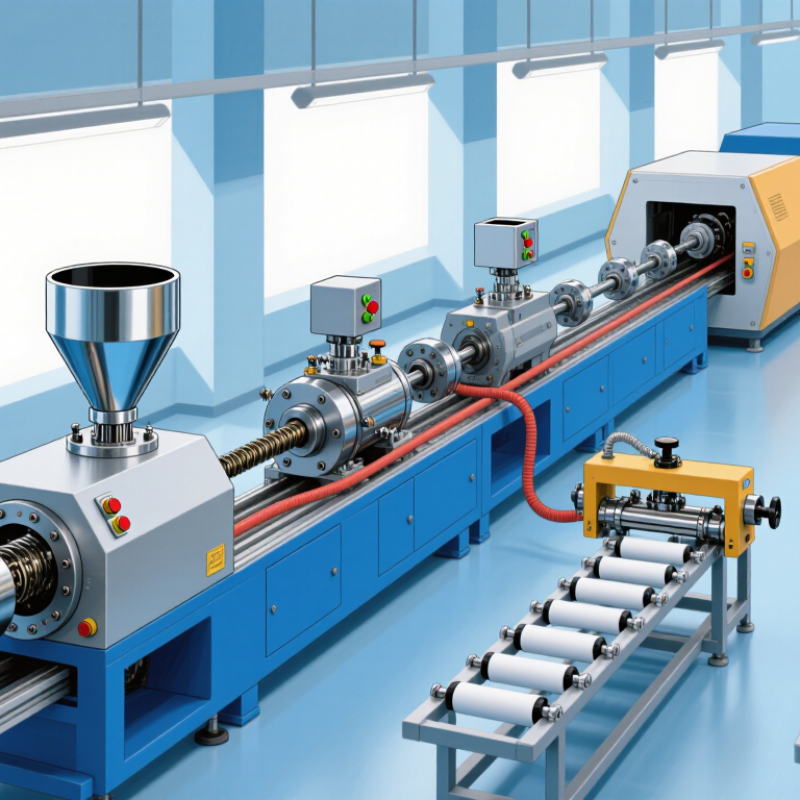
PVC extrusion machines convert rigid or flexible PVC compounds into continuous products such as pipes, window profiles, and cable conduits. A typical line feeds material through a heated barrel and rotating screw, then shapes it through a die. Downstream calibrators, cooling tanks, haul-offs, and cutters keep the product dimensionally stable. Small details matter. Uneven cooling, for example, can leave a pipe oval or a profile warped.
The scale of plastics manufacturing gives this equipment a significant role. Plastics Europe’s Plastics—the Fast Facts 2024 reports global plastics production of 413.8 million tonnes in 2023; that figure covers all plastics, not PVC alone. For buyers comparing Chinese suppliers, useful evidence includes documented output tolerances, screw and barrel material specifications, energy-use measurements, and trial runs using the intended formulation. Ask to inspect finished samples, not just machine settings. A fast line is not always a good line. PVC formulations vary, and a supplier’s standard configuration may need adjustment for wall thickness, surface finish, or recycled content. That trade-off deserves testing before purchase.
China’s PVC extrusion supplier market is not a single tier. It includes integrated machinery makers, specialist line builders, and smaller workshops focused on selected equipment. Integrated suppliers may coordinate the extruder, die, cooling system, haul-off, and cutter. Specialist firms often concentrate on pipes, profiles, or boards, where tooling and line layout differ.
The distinctions show up on the factory floor. A pipe line may pair a conical twin-screw extruder with a vacuum calibration tank and spray cooling. A profile line depends heavily on die design and steady haul-off. Some suppliers make core equipment in-house but source controls or auxiliary units elsewhere. That is common, but buyers should ask who handles commissioning and replacement parts. Details matter.
Suppliers also vary by service capacity and export experience. One may provide clear drawings, trial-run records, and remote troubleshooting; another may offer a lower quote with fewer documented checks. Not always. A quotation alone cannot reveal how well a line holds output during a long production shift. Buyers can compare screw and barrel specifications, motor ratings, control systems, and acceptance criteria, then request a sample run using their material. The market is broad, and its categories overlap; even careful comparisons leave room for uncertainty.
A dependable PVC extrusion machine supplier should prove performance under realistic production conditions, not just present polished brochures. Request a factory acceptance test using your resin formulation, target profile, and operating speed. Measure output stability, dimensional tolerance, melt temperature, and scrap over several hours. Ask for screw and barrel material specifications, gearbox ratings, and control-system documentation. Small details matter: a drifting temperature reading can distort a window profile before operators notice.
Compare energy use per kilogram, changeover time, and access to wear parts. The OECD’s Global Plastics Outlook (2022) reports that only 9% of plastic waste was recycled globally in 2019; this is not PVC-specific, but it underlines why regrind handling and process consistency deserve scrutiny. Request test data showing how recycled content affects output and product quality. Check whether the supplier provides installation, operator training, and response-time commitments in writing. A low quotation can hide costly commissioning delays. I would still hesitate if a supplier refuses a witnessed trial. References from similar production lines are useful, though they rarely reveal every weakness. Ask for service records and confirm which components are stocked locally. Then compare total operating costs, not only the purchase price.
China’s PVC extrusion machine suppliers generally fall into several profiles. Integrated manufacturers build complete lines, including mixers, extruders, cooling tanks, haul-offs, and cutters. Their advantage is coordinated equipment and one technical contact. Specialized suppliers focus on a narrower range, such as window profiles, pipes, or ceiling panels. They may offer more relevant tooling and process advice for that application. Export-oriented suppliers often provide remote commissioning and English-language documentation. Check what support is available after installation, not only what appears in a quotation.
A useful supplier profile should describe machine configuration, materials experience, output range, and service arrangements. Ask for a trial using your actual PVC formulation and profile die. Watch the melt flow, surface finish, and dimensional consistency during a sustained run. Small details matter. A supplier may quote an attractive hourly output, yet conditions behind that figure can be unclear. Request the test speed, product dimensions, and acceptance method in writing. Review spare-part lead times and the scope of operator training, too. Factory visits and conversations with existing customers can add useful context, though they take time. One imperfect point remains: published specifications rarely tell the whole story. Real production trials are more revealing.
Comparing PVC extrusion machine suppliers in China requires more than checking quoted output. Match the line to the profile, resin formulation, and expected shift hours. Ask whether the screw and barrel design suits PVC’s heat sensitivity. Stable temperature control matters. So does consistent feeding. For profile production, inspect the vacuum calibration table, cooling length, haul-off grip, and cutting accuracy. These details affect dimensions and surface finish.
Equipment scope can vary widely. One quotation may include dies, calibration tooling, and a mixer, while another covers only the extruder. Request a clear list of included components, motor ratings, control systems, and expected production ranges. Ask how output was measured and under what conditions. A factory acceptance run using a representative formulation is more useful than a headline capacity figure. Small details matter.
Service capability deserves equal attention. Confirm commissioning support, operator training, spare-part availability, and typical response times. Ask for manuals in a language your team can use. Remote troubleshooting helps, but it cannot replace accessible technical support when a line stops. I would still keep some doubt: a polished proposal does not prove reliable delivery. Check references, inspect workmanship, and clarify warranty exclusions before comparing final costs. No checklist catches everything.
A practical comparison framework for evaluating suppliers. Capabilities vary by machine model, product specification, and contract; verify details directly with each supplier.
| Comparison area | Common capabilities and options | What to verify with the supplier |
|---|---|---|
| Product and application range | Lines may be configured for rigid PVC pipe, profiles, sheets, or other specified products. Tooling and downstream equipment differ by application. | Confirm the exact product dimensions, material formulation, tolerances, and required line configuration in writing. |
| Extruder configuration | Rigid PVC lines commonly use twin-screw extruders. Conical and parallel twin-screw configurations are both available; suitability depends on the application and production requirements. | Request screw and barrel specifications, drive details, heating and cooling arrangements, and an explanation of why the configuration suits your product. |
| Complete production line | A line may include a feeder, extruder, die, calibration and cooling equipment, haul-off, cutter, and product handling equipment. Pipe lines may require additional or different downstream units. | Check which units are included, which are optional, and whether the supplier is responsible for line integration and commissioning. |
| Output and operating range | Production rate depends on the extruder, die, material formulation, product size, cooling capacity, and line setup. No single output figure applies to every PVC product or configuration. | Ask for a guaranteed output range tied to your product and formulation, plus the test conditions and acceptance criteria. |
| Controls and automation | Control packages can include a PLC and HMI, temperature control, operating alarms, and adjustable line settings. Features and integration vary by model and specification. | Confirm the control-system scope, language options, electrical components, data access, and whether remote diagnostics are included. |
| Tooling and product changeovers | Dies, calibration tooling, and related components are product-specific. Changeover time and the number of products supported depend on the tooling and line design. | List all required tooling, spare sets, changeover procedures, and the products each quoted tool can manufacture. |
| Quality checks and acceptance | Machine inspection and production trials may be offered before shipment. Test methods and acceptance criteria should be agreed for the specific order. | Request a factory acceptance test plan, sample-product measurements, inspection records, and a written list of acceptance conditions. |
| Installation and training | On-site installation, commissioning, and operator training may be available, subject to the order, location, and service agreement. | Confirm service scope, travel and accommodation costs, schedule, required site utilities, and the number of training days. |
| Warranty, spare parts, and support | Warranty terms, spare-parts availability, response times, and technical support channels differ among suppliers and contracts. | Obtain the written warranty, recommended spare-parts list, support hours, response commitments, and process for service requests. |
| Documentation and compliance | Documentation and conformity requirements depend on the destination market and the agreed machine specification. | Specify applicable electrical and safety requirements before ordering and request the relevant manuals, declarations, and supporting documents. |
It turns rigid or flexible PVC compounds into continuous products, such as pipes, window profiles, and cable conduits.
A rotating screw moves heated material through a die. Calibrators, cooling tanks, haul-offs, and cutters shape and finish the product.
A trial using your formulation and die can reveal unstable output, surface flaws, or dimensional drift. Brochures cannot show everything.
Check output stability, product dimensions, melt temperature, and scrap over several hours. Record the test speed and acceptance method.
Review screw and barrel materials, gearbox ratings, and control-system documents. A drifting temperature reading can distort a profile.
Ask for energy use per kilogram, changeover time, and wear-part availability. A low purchase price can hide commissioning costs.
Confirm installation help, operator training, service response times, and local spare-part stock in writing. Not always.
It can affect output and product quality. Request trial data with your intended recycled content; I would not rely on estimates alone.
No. Inspect finished samples and, if possible, speak with similar production lines. A trial helps, but it cannot reveal every future problem.
This article explains how PVC extrusion machines support the production of pipes, profiles, panels, and other plastic products by heating, shaping, and forming material continuously. It also outlines the structure of China’s supplier market, where manufacturers may differ in production scale, technical specialization, customization options, and after-sales support. Understanding these differences can help buyers define their requirements before comparing potential suppliers.
The guide presents practical criteria for evaluating a Pvc Extrusion Machine supplier, including equipment design, output capacity, energy efficiency, quality control, technical assistance, and service responsiveness. It also introduces the kinds of capabilities found among leading suppliers without focusing on brand names, then compares equipment and services to show how buyers can assess overall value. By matching machine specifications and support to their production goals, businesses can make a more informed supplier selection.
