
Specialized Extrusion Lines & Upstream Production Units
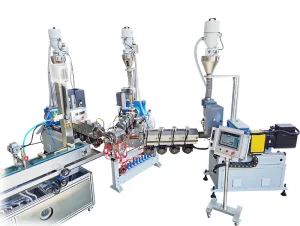
Precision-engineered extrusion platforms configured to minimize scrap rates, stabilize dynamic melt rheology, and guarantee outer-diameter (OD), inner-diameter (ID), and concentricity compliance in 24/7 automated operations.
Global Commercial & Industrial Status of Custom Extrusion Moulding
Continuous polymer extrusion is the backbone of high-volume industrial transformation, transitioning rapidly from commoditized plastic processing into an era of high-precision rheological manipulation and closed-loop Industry 4.0 automation.
Macro Shift Toward High-Performance Polymers
The global industrial plastics market demands escalating thermal stability, chemical inertness, and dynamic barrier properties. Standard single-polymer processing is superseded by co-extruded engineering fluoropolymers (PVDF, ETFE, FEP), functional polyamides (PA11, PA12), and thermoplastic vulcanizates (TPV). Precision extruder barrel metallurgies, advanced nitride coatings, and specialized screw geometries are now non-negotiable requirements.
Automotive Electrification & Thermal Architectures
Electric Vehicles (EVs) have fundamentally altered fluid management topology. Internal combustion engine fuel lines are rapidly yielding to intricate battery thermal loop lines, high-voltage wire harnesses, and corrugated PA/PP conduits. Tight space envelopes demand micro-wall tolerances and multi-layer chemical barriers to prevent coolant fluid permeation over 15-year vehicle lifecycles.
MedTech Micro-Tubing Stringency
Minimally invasive surgical instruments, catheter delivery systems, and peristaltic infusion assemblies impose strict cleanroom extrusion tolerances. Multi-lumen cross-sections must maintain concentricity within ±0.015 mm at extrusion speeds surpassing 80 meters per minute. Downstream ultrasonic inspection, servo haul-offs, and non-contact fly cutting ensure zero defect escapes.
Engineering Architecture of the Precision Extrusion Moulding Process
Extrusion moulding is a complex thermodynamic discipline governed by polymer rheology, non-Newtonian shear kinematics, and thermal boundary layers. At Jiangsu Baodie (BAOD EXTRUSION), machinery design balances mechanical rigidity with sub-millibar pressure control.
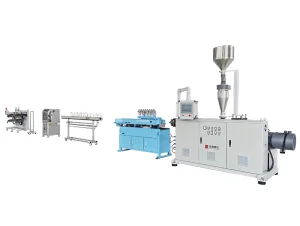
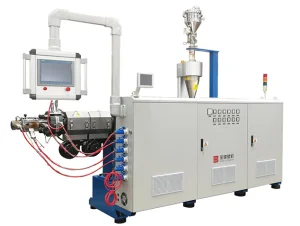
Unlike standard bulk extrusion, precision extrusion relies on closed-loop feedback across upstream plasticization, co-extrusion die manifold dynamics, vacuum calibration cooling, and multi-axis optical tracking. Our SJ Series single-screw extruders feature optimized L/D ratios (from 28:1 to 38:1) engineered with barrier screws and Maddock mixing heads to homogenize melt temperature and eliminate localized shear degradation.
Extrusion Process Lifecycle & Quality Gates
Gravimetric Dosing & Melt Plasticization
Precision multi-component gravimetric feeding paired with bimetallic barrel heating zones regulates melt flow index (MFI) and polymer density.
Die Head Rheology & Layer Distribution
Spiral mandrel or cross-head dies distribute polymers uniformly. In multi-layer setups, barrier layers (EVOH, ETFE) are accurately bonded with adhesive tie-layers.
Vacuum Hydro-Dynamic Calibration
Differential vacuum cooling tanks stabilize profile dimensions immediately post-die, quenching thermal stress through laminar water vortex rings.
Closed-Loop Servo Traction & In-Line Gauging
Dual-axis laser micrometers continuously transmit dimensional data to the puller servo drives, actively compensating for micron-level drift in real time.
Specialized Industrial Deployments & Real-World Engineering
Extrusion systems must align with localized regional standards—from North American SAE automotive specifications to European Medical Cleanroom ISO Class 7/8 benchmarks.
Automotive Fluid & Thermal Management Lines
Engineered for Tier-1 automotive suppliers, our multi-layer PA lines extrude up to five specialized layers (PA12 / Tie / EVOH / Tie / PA6). These lines meet ultra-low fuel vapor permeation standards (CARB/EPA) and supply battery pack glycol cooling lines that withstand thermal shock cycling from -40°C to +125°C.
Specialized Mining Non-Electric Shock Tubes
Shock tube and detonator lines demand zero manufacturing defects. Our high-precision lines co-extrude micro-bore Surlyn/PE tubing while simultaneously depositing micro-dosed HMX/aluminum reactive powder uniformly onto the inner wall without blocking, ensuring uninterrupted shockwave velocity (>2,000 m/s).
Continuous TPV Composite & Weatherstrip Seals
Replacing traditional thermoset EPDM rubber, our fully automated TPV automobile sealing strip lines integrate rigid and soft co-extrusion, continuous inline metal carrier insertion, online punch-notching, flocking coating, and precision cut-to-length systems in a single compact footprint.
Ultra-High Molecular Weight (UHMWPE) Profiles
Handling high-melt-viscosity polymers like UHMWPE requires extraordinary barrel torque and specialized screw heating kinetics. BAOD extrusion platforms provide stable continuous profile formation for conveyor wear strips, guide rails, and heavy-duty sliding structural components.
Technology Roadmap & Future Outlook: Next-Gen Extrusion Dynamics
The future of polymer extrusion is rooted in AI-driven closed-loop edge computing, circular post-consumer resin compatibility, and adaptive self-optimizing tooling.
| Technological Vector | Current Benchmark (2024–2026) | Mid-Term Horizon (2027–2030) | Visionary Horizon (2031–2035) |
|---|---|---|---|
| Melt Rheology Automation | Manual recipe tuning with PID melt pressure & temperature feedback loops. | Edge-computing AI neural networks adjusting barrel zones dynamically based on inline MFI fluctuation. | Autonomous closed-loop rheological balancing with zero manual calibration during resin lot transitions. |
| Sustainable Polymer Processing | Processing virgin engineering resins and up to 30% controlled PIR (Post-Industrial Recycled) blends. | 100% bio-based polyesters (PHA, PLA) and high-ratio PCR compounds with dynamic degassing vents. | Self-cleaning devolatilization barrels processing chemically recycled mixed-grade biopolymers without scrap. |
| Dimensional Quality Verification | Dual-plane laser OD gauging + periodic off-line destructive cross-section microscopy. | 360-degree inline multi-axis ultrasonic wall-thickness tracking linked to automatic die-lip adjustments. | Sub-micron computed optical tomography integration for continuous layer adhesion & void verification. |
| Downstream Mechanical Synchrony | Independent servo pullers synchronized via digital fieldbus (EtherCAT/Profinet). | Predictive digital twin algorithms counteracting puller belt compression micro-slip in real time. | Direct contactless electromagnetic haul-off mechanisms eliminating mechanical gripping stress entirely. |
Turnkey Engineering Architecture
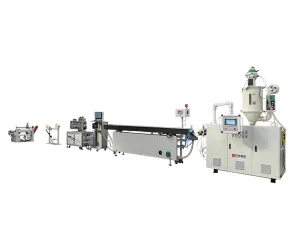
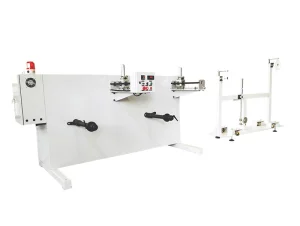
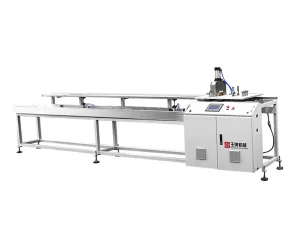
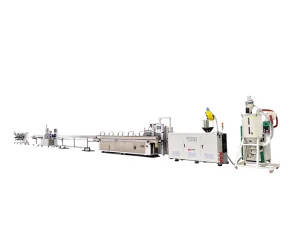
BAOD EXTRUSION delivers completely unified extrusion cells. From resin drying, dehumidification, and gravimetric dosing through to vacuum sizing, haul-off, dynamic flying-knife cutting, and automatic dual-shaft winding—every module operates on an integrated SCADA architecture.
- Central HMI Controls: Single-touchscreen recipe management across all line modules.
- CE / UL Compliance: Fully compliant safety interlocks, guarding, and emergency protocols.
- Remote Tele-Diagnostics: Industrial VPN gateways for instant remote software support and parameter calibration.
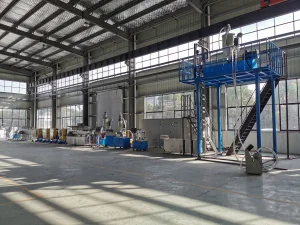
- Material Trial Laboratory: 16,000 m² factory equipped for customer tooling and polymer trial runs prior to shipment.
Turnkey Manufacturing Strategy Built for Zero-Downtime Plants
Procuring an extrusion line is a long-term capital investment. The true cost of ownership is determined by start-up scrap rate, energy consumption per kilogram, and unassisted run reliability.
BAOD EXTRUSION engineers turnkey systems that mitigate early failure modes. Our Taiwanese-heritage engineering roots combine strict precision manufacturing with cost-competitive localized assembly in Jiangsu. Every component—from the high-torque helical gearboxes to the hardened 38CrMoAlA nitrided barrels—is selected for continuous duty in challenging plant environments.
Whether retrofitting an existing profile production line with high-speed vacuum calibration cooling tables or installing a multi-layer PA fuel line from scratch, our project management team handles technical specification, custom screw rheology design, Factory Acceptance Trials (FAT), and on-site global commissioning.
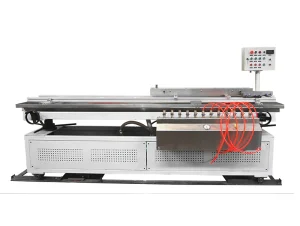
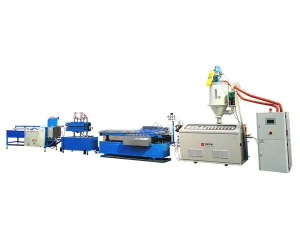
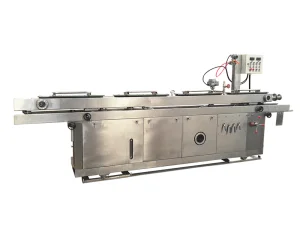
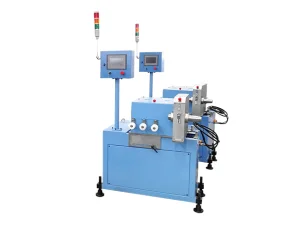
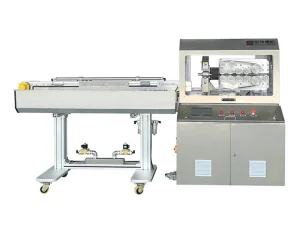
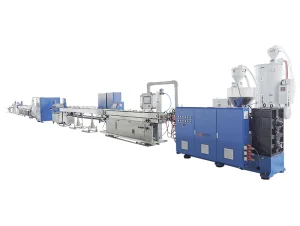
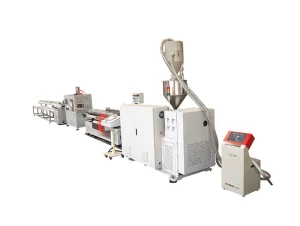
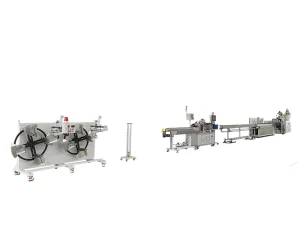
Downstream Calibrators, Cutters & High-Tolerance Profile Lines
Explore our downstream precision pullers, rotary fly knives, profile calibration tables, and high-performance composite lines designed to maintain exact geometric tolerances.
Frequently Asked Technical Questions on Custom Extrusion
Comprehensive answers covering screw kinematics, thermal stabilization, resin rheology, and global acceptance protocols.
How does BAOD maintain tight outer-diameter (OD) and wall-thickness tolerances under high line speeds?
Dimensional consistency is achieved through a multi-tier closed-loop control architecture. First, our SJ Series extruders employ high-precision gearboxes driven by permanent magnet servo motors that hold screw rotation speed fluctuations below 0.05%. Second, melt pressure transducers at the die inlet dynamically buffer flow surge. Third, downstream dual-axis laser micrometers and ultrasonic gauges communicate directly with the servo puller via high-speed EtherCAT, instantly adjusting haul-off velocity to compensate for thermal draw-down variations down to ±0.02 mm.
What screw design strategies prevent shear degradation in sensitive polymers like Fluoropolymers (PVDF/ETFE) and Medical TPU?
Fluoroplastics and aliphatic thermoplastic polyurethanes possess narrow thermal processing windows and exhibit sharp shear thinning behavior. We employ low-compression barrier screws with extended L/D ratios (32:1 to 36:1) alongside micro-polished flight radii. For fluoropolymers, barrels and screws are forged from GH113 or Hastelloy superalloys to resist acid corrosive wear at elevated temperatures (up to 400°C), preventing thermal stagnation zones and polymer charring.
Can BAOD multi-layer extrusion lines process dissimilar materials without delamination issues?
Yes. Interfacial adhesion between dissimilar polymers (e.g., PA12 to EVOH or fluoropolymers) is guaranteed through custom-engineered spiral co-extrusion feedblocks and precision tie-layer application. Our flow channels are numerically optimized using Computational Fluid Dynamics (CFD) to equalize shear stress and velocity profiles across each layer interface before entering the exit die lands, eliminating shear-induced delamination.
What verification protocols are executed during a Factory Acceptance Trial (FAT) for international buyers?
Every turnkey extrusion line undergoes a full commissioning protocol at our 16,000 m² Haian facility using the client's actual raw polymer resin. We run the line continuously for 8 to 24 hours under full target operating speeds, logging dimensional repeatability, melt pressure stability, motor current draw, and cut-length standard deviations. A comprehensive FAT certificate with Cpk statistical process capability reports is delivered and approved prior to international crating and shipping.
How does purchasing from BAOD EXTRUSION compare with sourcing from European extrusion manufacturers?
BAOD offers comparable manufacturing precision, dimensional stability, and automation integration at a significantly optimized capital expenditure (CapEx). Originating from Taiwan-heritage engineering since 2002 and refined through decades of precision tooling, our equipment features tier-one European and Japanese electrical and motion components (Siemens PLC, Schneider electrics, Omron sensors, Yaskawa servos). Customers gain equivalent engineering capabilities with reduced lead times and personalized factory customization.
Ready to Engineer Your Custom Extrusion Moulding Line?
Provide your technical part drawings, target polymer resin specifications (MFI, density), and output requirements. Our senior engineering team will evaluate your melt kinematics and deliver a turnkey line design within 48 business hours.