
China PVC Extrusion Temperature Factory & Factories
A procurement-grade guide to how Chinese extrusion equipment manufacturers define, control and validate PVC temperature profiles — and what that means for tube, profile, medical tubing and composite hose lines installed in Europe, North America and Southeast Asia.
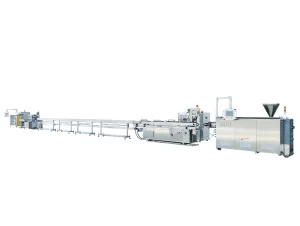
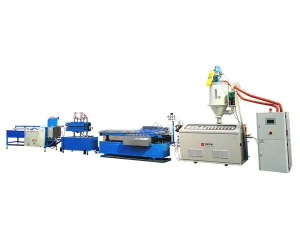
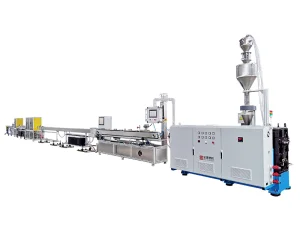
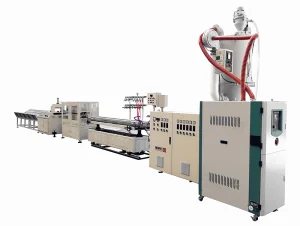
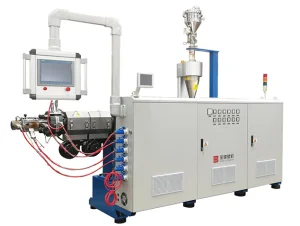
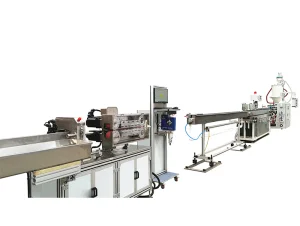
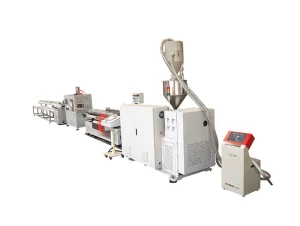
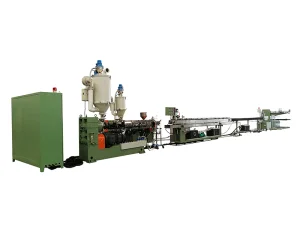
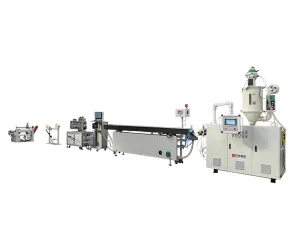
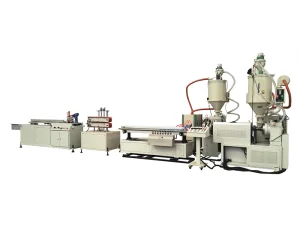
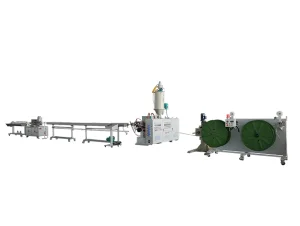
PVC-Ready Extrusion Lines & Line Units
Every platform below is engineered around a specific melt-temperature window. Final temperature zoning, screw geometry and cooling strategy are configured against your compound datasheet, not a stock template.
Why PVC Extrusion Temperature Decides Whether a Line Makes Money
Not a datasheet number — a repeatable, auditable process window that survives three shifts, a new compound batch and a 240-hour continuous run.
Years of extrusion design and manufacturing
In-house manufacturing base in Haian, Jiangsu
Typical barrel temperature control repeatability
Engineers, technicians and support staff
Of all the parameters in plastics processing, PVC temperature is the one least forgiving of guesswork. Both rigid and flexible PVC compounds sit inside a narrow processing corridor: polyvinyl chloride begins to dehydrochlorinate from roughly 140 °C, and above 190–200 °C degradation accelerates sharply — depending on K-value, lubricant package and stabiliser system. Long before yellowing or plate-out becomes visible on the shop floor, the damage is already showing up in the product: surface roughness, dimensional drift, ovality, gel specks, and medical tubing that will not pass a downstream leak or bond-strength test.
That is precisely why PVC extrusion temperature functions as a purchasing criterion rather than a technical footnote. A Chinese extrusion factory can publish a barrel temperature range on a quotation; what an experienced buyer actually wants to know is whether that window is repeatable on the third night shift, with a different compound lot, after the die has been cleaned and re-clamped. Repeatability depends on three things that no spreadsheet shows: the thermal hardware of the barrel, the architecture of the control loop, and the process engineers who read melt-pressure trends the way a doctor reads an ECG.
The PVC Extrusion Temperature Curve, Stage by Stage
Every PVC line — in Jiangsu, Bavaria or Ohio — runs the same thermal voyage: conveying, compression, melting, metering, pressurising, then shaping and cooling. What differs is how much headroom each zone is given, and how tightly the controller holds it.
There is a subtlety that separates experienced PVC processors from PE or PP specialists. In polyolefin extrusion, temperature is essentially a viscosity decision — hotter melt flows faster, and counter-productive heat is rarely catastrophic. In PVC extrusion, heat is an adversary as much as a tool. The operator is not optimising for "how hot" but for "how much thermal history the compound can be exposed to before the stabiliser is exhausted." This is why barrel-zone setpoints on a PVC line are frequently lower than the theoretical melting point suggests, and why so much of the real work happens through screw geometry, shear generation and residence-time control instead.
Three further variables reshape the curve for every product family:
- Compound K-value and stabiliser type. A calcium-zinc stabilised medical compound and an organotin-stabilised industrial compound reach their degradation threshold at different points, and respond differently to residence-time spikes.
- Feed-zone cooling. PVC is normally processed on a grooved, water-cooled feed throat. Without it, bridging and inconsistent solids conveying shift the whole downstream thermal balance.
- Die-land temperature versus die-land pressure. The die head is where surface finish is won or lost. On a precision tube line, adaptor and die temperatures are usually tuned independently of the barrel, because melt pressure — not melt temperature alone — governs the final wall thickness.
How PVC Extrusion Temperature Plays Out in Real Production
The same barrel, the same screw, the same controller — but six completely different thermal strategies. These are the localised scenarios our engineering team configures most often.
PVC Medical Tubing
Infusion sets, blood lines and drainage tubes demand a melt window typically held between 150–180 °C with strict residence-time control. Medical-grade soft PVC loses clarity and bondability the moment thermal history exceeds specification, so the line must be able to change size and colour quickly without a full thermal restart.
Automotive Sealing & Profiles
Multi-durometer door and window seals combine a rigid ABS or PP carrier with a soft PVC or TPV lip. Each stream needs its own independent PID loop, because the rigid and flexible polymers reach comparable viscosity at temperatures that differ by 20 °C or more.
PVC Corrugated Conduit
Single-wall corrugated pipe for wire harness and electrical protection is a melt-strength game. The melt must be hot enough to fill the corrugator mould blocks and cold enough to hold corrugation form as it leaves — typically a 5–10 °C window, not a 30 °C range.
Construction & Drainage Pipe
Thick-wall rigid PVC pipe requires full core fusion without overheating the outer skin. Barrel temperatures are often graded downwards towards the die, while vacuum-sizing water temperature is staged to control residual stress and prevent stress-crack failures in service.
Flexible PVC Hose & Profile
Plasticiser loading lowers melt viscosity, so processing temperatures can usually drop 10–15 °C relative to rigid PVC. The trade-off is volatilisation: venting, screw design and die-land temperature must be balanced to avoid plasticiser migration and die-lip build-up.
Composite & Coated PVC
Braided reinforced hose, silicone-core micro duct and cross-head coated products place two polymers in proximity. The line must hold edge temperature control, because the two melts drift in viscosity at different rates and a few degrees of imbalance shows up as adhesion failure.
Where PVC Extrusion Temperature Control Is Heading
Temperature control on PVC lines is moving from "hold a setpoint" to "hold a material outcome." Here is the four-stage roadmap our engineering team is working against.
Multi-Zone PID with Melt Feedback
Independent closed-loop control on every barrel zone, adaptor and die, paired with a melt-pressure transducer at the screen pack. Alarms trigger on deviation, not on failure.
Coupled Pressure–Temperature Control
Controllers begin adjusting zone setpoints from melt-pressure trends rather than temperature alone, compensating automatically for compound lot variation and screw wear before scrap appears.
Digital Twin & Virtual Commissioning
A thermal model of the barrel, die and cooling train is commissioned before the machine ships, so operators can test a new PVC compound in simulation before committing material to the hopper.
Adaptive AI Temperature Optimisation
Vision-based surface inspection and inline metrology feed back into the thermal model, allowing the line to optimise itself around recycled-content variability and tighter medical tolerances.
The Structural Advantage of a Chinese Extrusion Equipment Factory
Cost is the headline. Resilience is the real story — and it is what determines whether your line is running in month six or waiting for a spare thermocouple in month seven.
China's extrusion equipment cluster is not a single city; it is a dense, interlocking corridor running through Jiangsu, Zhejiang, Shanghai and Guangdong. Screw and barrel specialists, gearbox manufacturers, servo drive suppliers, temperature-module vendors and precision machining shops all sit within a few hours' drive of one another. For a buyer, that density translates into something more useful than a lower unit price: compressed lead times on every component that is not built in-house.
Vertical Integration
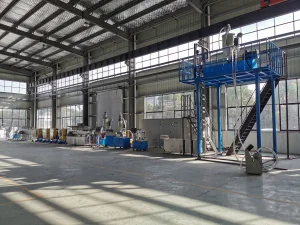
Barrel machining, screw grinding, die-head manufacture, vacuum sizing tanks, haul-offs and electrical integration all happen under one 16,000 m² roof in Haian, Nantong — reducing dependency on third-tier subcontractors.
Cluster Proximity
Servo motors, gearboxes, temperature controllers and pneumatic components are sourced from suppliers within a 300 km radius, keeping both lead time and spare-part availability predictable after installation.
Export Logistics
Nantong sits within easy reach of Shanghai and Ningbo ports, enabling consolidated container loading, seaworthy crating and documented pre-shipment inspection for European, Middle Eastern and North American projects.
Lifecycle Spares
Critical wear parts are standardised across platforms, so a plant running several BAOD lines can stock one common set of thermocouples, heaters and transducer spares instead of four separate inventories.
Global Commercial & Industrial Status of PVC Extrusion
Three forces are simultaneously tightening the PVC processing window — and all three are pushing buyers to evaluate temperature control capability rather than headline machine price.
1. Stabiliser regulation is reshaping the compound. The shift away from lead-based stabilisers toward calcium-zinc and organic-based systems across Europe and North America has narrowed the practical processing window on many industrial PVC compounds. Calcium-zinc systems generally require tighter residence-time and temperature management than the older formulations they replace, which raises the value of a well-controlled barrel and a properly matched screw.
2. Medical and automotive demand keeps moving the tolerance bar. Disposable medical tubing continues to grow on the back of ageing populations and single-use device expansion, while automotive fluid lines and sealing profiles are being redesigned around electrification and lightweighting. Both trends push tolerances from "commercially acceptable" toward "assembly-critical" — and both put the burden directly on temperature stability.
3. Supply diversification is now a procurement policy, not a preference. Multi-region sourcing has become standard practice for tube and profile producers, and Chinese equipment makers have moved into segments that were historically dominated by European suppliers. The competitive question is no longer "China or Europe," but "which supplier can document measured dimensional stability, scrap rate and service response on my own material."
BAOD EXTRUSION's own position reflects this shift: engineering roots that trace back to KINGSWEL GROUP in Taiwan, a brand founded in 2002, and a 16,000 m² production facility in Haian that now supplies precision tube, profile and coating lines into automotive, medical and industrial applications worldwide. The factory's answer to global competition is not a lower price tag — it is a material trial, run on the customer's own compound, with the thermal data handed over for independent review.
What "Factory Direct from China" Should Actually Include
Exporting an extrusion line is not the same as supporting one. These are the four pillars that separate a genuine factory partnership from a trading transaction.
Electrical & Safety Compliance
Voltage, frequency, control-panel language and plug standards configured to the destination market. CE-relevant guarding, interlocks and emergency-stop architecture designed in from the start rather than retrofitted.
Documentation Package
English operation manuals, wiring diagrams, temperature setpoint sheets, PLC backup, spare-part lists with part numbers, and the measured dimensional report from the factory acceptance trial.
Commissioning & Training
On-site installation supervision, operator training on the temperature curve and alarm response, plus remote diagnostic support through the Global Service programme for the life of the line.
Quality Traceability
Component traceability records, incoming inspection and final test reports, plus a documented factory acceptance trial run on your material wherever the compound can be shipped to Jiangsu in advance.
A Practical Specification Checklist for PVC Line Buyers
Hand this list to every supplier you shortlist. The responses are far more revealing than a price comparison.
- Barrel zone count, heater wattage and cooling method for the feed throat
- Screw geometry and L/D ratio proposed for your compound's K-value
- Temperature controller brand, sampling rate and alarm logic
- Melt-pressure transducer location and whether feedback is closed-loop
- Cooling-tank staging, vacuum level and water-temperature control
- Measured dimensional capability data from a trial on comparable tubing
- Installed power, compressed air and chilled water requirements
- Documented spare-parts list with part numbers and typical lead times
PVC Extrusion Temperature Factory — Frequently Asked Questions
The questions overseas buyers ask most often before they commit to a Chinese extrusion equipment supplier.
What is the ideal melt temperature for PVC extrusion?
Why does PVC need a lower processing temperature than PE or PP?
How does a Chinese factory keep the extrusion temperature stable over 24-hour runs?
How do rigid PVC and flexible PVC temperature profiles differ?
What documentation should accompany a PVC extrusion line for medical tube production?
Can an existing extrusion line be upgraded with better temperature control?
How long does it take from order to delivery for a PVC extrusion line from China?
How does BAOD EXTRUSION support overseas customers after delivery?
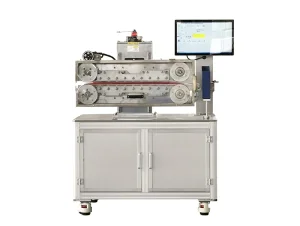
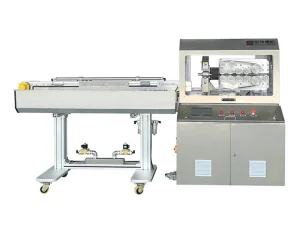
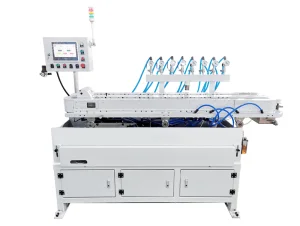
Downstream Units, Die Systems & Specialised Lines
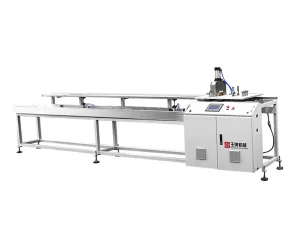
Temperature control does not stop at the die. The downstream train — vacuum sizing, haul-off, cutting and coiling — determines whether the thermal work done in the barrel survives all the way to the packing table.
Specifying a PVC Extrusion Line? Start With the Temperature Curve.
Share your product drawing, compound datasheet, tolerance target and output requirement. BAOD EXTRUSION engineers will return a proposed thermal profile, screw recommendation and downstream configuration — in English, on paper, ready to compare against any supplier in the world.