
Specialized Extrusion Lines & Downstream Equipment
Continuous production architectures engineered for dynamic melt control, microscopic tolerance stability, and automated high-output spooling.
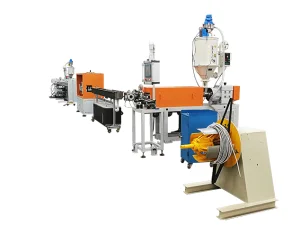
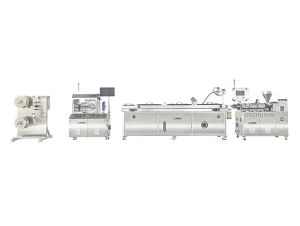
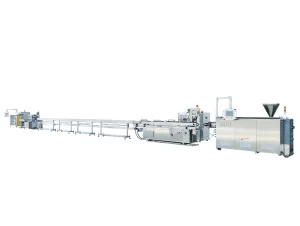
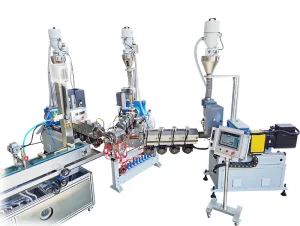
Engineering Precision in Custom Elastomer Extrusion
Overcoming nonlinear die swell, thermal degradation, and dynamic cross-linking challenges in modern thermoplastic vulcanizates and elastomeric co-extrusion.
Rheology & Melt Elasticity
Unlike standard polyolefins, thermoplastic elastomers (TPE, TPV, TPU) exhibit high viscoelastic memory and severe shear-thinning characteristics. When processed through narrow die orifices, unrelaxed elastic stresses induce nonlinear die swell ratios ranging from 1.25 to 1.85. Our high-precision screw geometries (L/D ratios 28:1 to 38:1) feature barrier flights and low-shear distributive mixing heads to ensure melt uniformity without thermal shearing.
- Low-shear screw design prevents polymer chain scission
- Micro-grooved feed bushings optimize dynamic feeding stability
- Calculated flow channel streamline eliminates dead zones
Thermal & Pressure Attenuation
In precision catheter and multi-lumen tube extrusion, melt pressure ripple directly translates to wall thickness variation. BAOD integrates high-precision melt pumps driven by permanent magnet servo motors that isolate pressure fluctuations from the screw feed, maintaining head pressure stability within ±0.1 bar. Multi-zone ceramic heaters coupled with dynamic air/oil cooling jackets guarantee PID temperature tracking within ±0.5°C.
- Closed-loop melt pump integration attenuates surge
- Bimetallic barrels withstand abrasive filler additives
- Sub-second PID response limits thermal drift
Closed-Loop Downstream Control
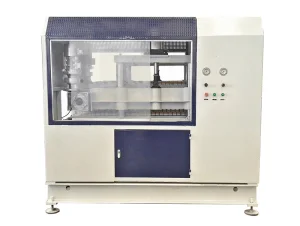
Elastomeric profiles collapse easily when exiting the crosshead prior to cooling. Our vacuum sizing calibrators utilize multi-chamber variable negative pressure modules with closed-loop water temperature recirculation. In-line non-contact multi-axis laser measuring systems feed dimensional deviations directly into the servo puller, dynamically correcting outer diameter and roundness at line speeds up to 100 m/min.
- Multi-axis dual-frequency laser measurement feedback
- Micro-gap vacuum calibration prevents profile collapse
- Servo-synchronized crawler pullers eliminate slippage
Why Global Tier-1 Manufacturers Choose Our Jiangsu Facility
Combining deep Taiwanese precision engineering roots with China's rapid industrialization corridor to provide unmatched agility, capital efficiency, and lifecycle reliability.
Integrated Supply Chain Synergy
Our Haian manufacturing hub sits at the epicentre of China's premier advanced manufacturing belt. From specialty alloy smelting (38CrMoAlA, GH113 bimetallic compounds) to high-precision 5-axis CNC electrical discharge machining (EDM) of spiral mandrel dies, 95% of our precision supply chain components are sourced within a 100 km radius. This enables rapid tooling iterations and short delivery timelines.
Unrivalled Cost-to-Performance Ratio
Compared to legacy German, Swiss, or Italian extrusion systems, BAOD delivers identical micron-level tolerances, surface finishes, and synchronized SCADA control at a 40% to 60% lower capital expenditure. This dramatic reduction in initial project CapEx allows multinational automotive and medical tubing extruders to accelerate ROI payback horizons from three years down to under fourteen months.
Agile Engineering Customization
Western machinery conglomerates frequently impose rigid, standardized platforms with excessive lead times for minor modifications. At BAOD, every single extrusion line is engineered directly from the customer’s specific resin rheological profile and part cross-section blueprint. Custom multi-layer configurations (up to 7 layers) and hybrid metal-wire encapsulation are engineered with zero bureaucratic delay.
Macro-Industry Solutions & Tailored Production Blueprints
Empowering mission-critical operations where polymer integrity directly dictates end-use safety, chemical resistance, and long-term mechanical resilience.
Automotive Fluid & Sealing Systems
Modern internal combustion engines and New Energy Vehicles (NEVs) demand low-permeation, heat-resistant elastomer hoses. Our lines produce multi-layer PA-TPV fuel conduits, vacuum brake pipes, and dynamic glass-run window profiles that drastically reduce vehicle interior noise (NVH) and resist extreme ozone exposure.
Biomedical & Healthcare Fluidics
From disposable IV infusion lines to precision multi-lumen peristaltic pump tubing, biomedical elastomer extrusion necessitates cleanroom compatibility and biocompatible processing. Our SPVC, TPU, and silicone lines feature stainless steel construction, HEPA air filtration laminars, and non-contact vacuum tanks to prevent external contamination.
High-Voltage EV & Optical Ducts
Subsea telecom cables, 5G micro-duct conduits, and automotive EV high-voltage wire harnesses demand high dielectric insulation and abrasion resistance. Our coating extrusion lines encapsulate copper wires, steel cables, and silicone internal lubed cores with flame-retardant elastomeric jackets at continuous high speeds.
Global Technical Procurement Checklist for Extrusion Lines
What corporate engineering teams must specify before signing technical agreements for customized elastomeric production machinery.
Resin Viscosity & Melt Flow Index (MFI)
Define exact resin trade name, MFI under specified test weights, temperature curves, and shear sensitivity to guarantee screw flight compression ratio matching.
Geometric Tolerance Profiles (Cpk Targets)
Set stringent outer diameter (OD), inner diameter (ID), wall concentricity, and ovality thresholds. Modern automotive benchmarks require a minimum Cpk ≥ 1.33.
Co-Extrusion Layer Adhesion & Tie Layers
When co-extruding incompatible polymers (e.g., PA12 and TPV), specify functional maleic anhydride-grafted tie-layers and precise layer percentage ratios.
In-Line Inspection & Closed-Loop Feedback
Ensure hardware interfaces support dual-plane laser OD gauges, ultrasonic wall thickness scanning, and spark testers wired directly into the main PLC puller control.
Factory Acceptance Testing (FAT) Protocol
Mandate that the machinery builder runs uninterrupted 8-hour continuous extrusion trials with client-supplied polymer pellets before export shipping clearance.
Power Grid Compatibility & CE/UL Compliance
Specify plant grid parameters (380V/480V, 50Hz/60Hz), safety interlocking sensors, guarded moving components, and emergency shutdown stop-circuits.
Frequently Asked Questions on Custom Elastomer Extrusion
In-depth answers addressing rheology, machinery longevity, die tooling, and cross-border project commissioning.
How does BAOD solve the severe die swell common in soft TPV and TPU formulations?
Can your extrusion lines handle multi-material co-extrusion with dissimilar hardnesses?
What metallurgical safeguards prevent abrasive or corrosive wear from fluoropolymers and flame retardants?
How is in-line dimension synchronization executed between pullers and extruders?
What is the typical Factory Acceptance Test (FAT) procedure for overseas shipments?
How does BAOD support global after-sales service and spare parts replenishment?
Advanced Precision Machinery & Ancillary Automation
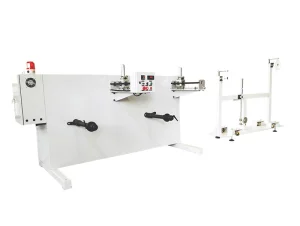
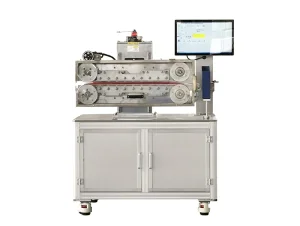
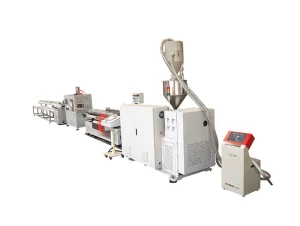
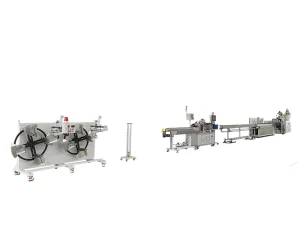
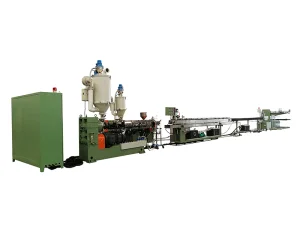
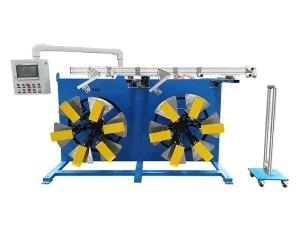
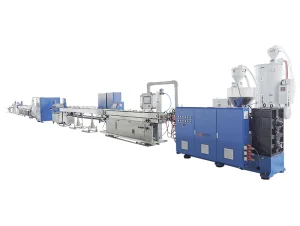
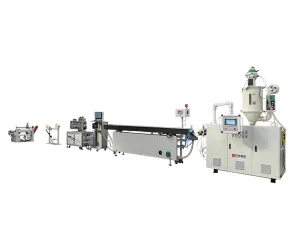
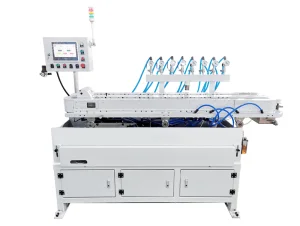
Explore precision haul-offs, ultra-high molecular weight profile lines, knit composite hoses, and high-speed auto-displacement winders.
Accelerate Your Elastomer Extrusion Project Today
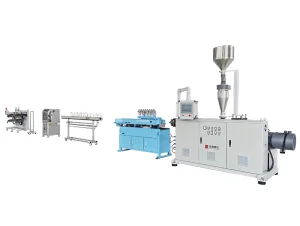
Whether configuring a multi-layer micro-catheter medical line, an automated automotive TPV weatherstrip system, or high-speed corrugated tube line, our senior extrusion engineering team provides comprehensive rheological analyses, customized tooling blueprints, and transparent turnkey quotes within 24 hours.