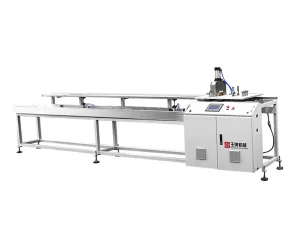
Precision Extrusion Engineering Platforms & Auxiliary Units
Deploying precision downstream systems, specialized multi-layer co-extruders, and automated haul-off units engineered in our 16,000 m² Jiangsu manufacturing center to ensure continuous cross-sectional accuracy.
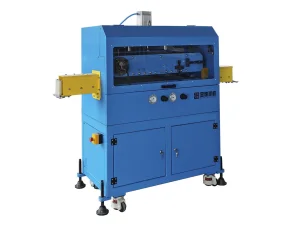
China QYP Series Belt Puller Manufacturer, Factory
Explore Machine Details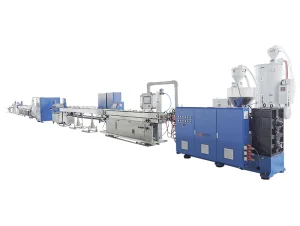
China TPV Knitting Compostie Hose Extrusion Line Factory, Factories
Explore Machine Details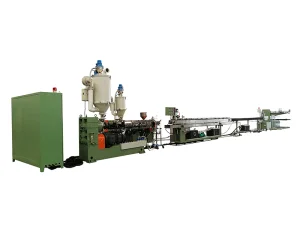
Custom HDPE Silicone Core Tube (Micro Duct) Extrusion Line Factory, Products
Explore Machine Details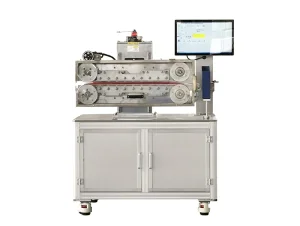
China TKB Series Precision High Speed Belt Puller Manufacturer, Factories
Explore Machine Details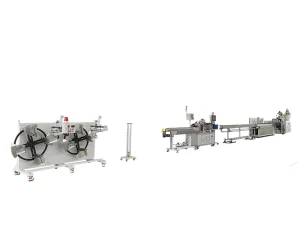
China PA (Nylon) Precision Tube Extrusion Line Factories, Product
Explore Machine Details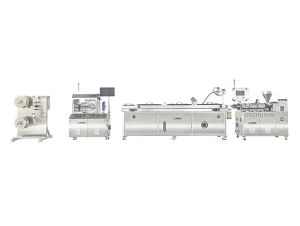
Custom Precision Medical Tube Extrusion Line Manufacturers, Factory
Explore Machine Details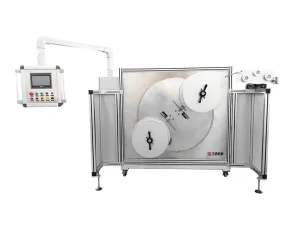
Custom Precise Traverse Displacement Auto-Spool Changing Coiling Machine Factories, Products
Explore Machine Details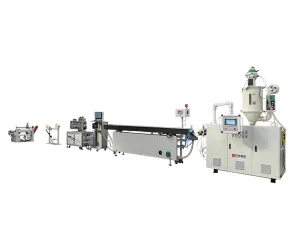
Custom Precision Fluorine Plastic Tube Extrusion Line Factory, Products
Explore Machine DetailsGlobal Macro Landscape & Industrial Paradigm Shifts in Silicone Extrusion
The cross-industry transition from traditional hydrocarbon elastomers (EPDM, NBR, Neoprene) toward high-purity polydimethylsiloxane (PDMS) silicone elastomers has accelerated across North American, European, and Asia-Pacific manufacturing hubs.
Electric Vehicle & Battery Thermal Management
With electric vehicle battery architectures moving to 800V and 1000V DC fast-charging regimes, profile seals must withstand dielectric breakdown voltages exceeding 20 kV/mm while maintaining flame retardancy under UL94 V-0 standards. Silicone extrusion profiles serve as compressible seals for battery tray enclosures, thermal interface liquid cooling silicone hoses, and fire-resistant cabling conduits across global EV tier-1 supply networks.
Medical Device & Biopharmaceutical Integrity
The global surge in single-use bioprocessing systems (SUS), peristaltic infusion pump tubing, and minimally invasive drainage catheters necessitates platinum-cured silicone with zero plasticizers, heavy metals, or peroxide by-products. Our cleanroom-manufactured silicone profiles meet stringent USP Class VI biocompatibility, ISO 10993 cytotoxicity, and European Pharmacopoeia 3.1.9 monographs for zero fluid contamination.
Architectural Glazing & Renewable Energy
Modern building envelopes demand hyper-resilient structural glazing gaskets capable of 30-plus years of outdoor exposure without UV embrittlement, ozone cracking, or compressive set degradation. Simultaneously, photovoltaic solar junction boxes, inverter potting profiles, and hydrogen electrolyzer membrane gaskets rely heavily on customized co-extruded solid and sponge silicone profiles for IP68 environmental hermeticity.
Polymer Rheology, Tooling Design & Continuous Vulcanization
Extruding silicone elastomers requires rigorous control over shear heating, non-Newtonian flow behavior, and polymer cross-linking kinetics. We bridge high-consistency rubber (HCR) and liquid silicone rubber (LSR) processing with custom tooling and curing ovens.
| Extrusion Parameter | Peroxide-Cured Silicone (HCR) | Addition-Cured / Platinum Silicone | Fluorosilicone (FVMQ) Profile | Co-Extruded Multi-Durometer Profiles |
|---|---|---|---|---|
| Curing Catalyst Mechanism | Organic peroxides (DBPH, DCBP) via free-radical cross-linking | Organoplatinum complex hydrosilylation (Si-H to Si-Vinyl) | Peroxide or platinum cross-linking with fluorinated side chains | Synchronized dual-crosshead platinum vulcanization |
| Volatile By-products | Requires 4-8 hr post-cure at 200°C for benzoic acid removal | Zero acid by-products; post-cure optional for low volatile matter | Trace low-boiling cyclic siloxanes, post-cure recommended | Clean, non-blooming, compliant with volatile extractable tests |
| Hardness Range (Shore A) | 20 Shore A to 85 Shore A | 10 Shore A to 80 Shore A (Ultra-soft to rigid) | 40 Shore A to 80 Shore A | Solid (60A) combined with Sponge (15A) or wire carrier |
| Chemical & Fuel Resistance | Moderate; swells in aromatic solvents and motor oils | High purity, resistant to alcohols, weak acids, biological fluids | Exceptional resistance to hydrocarbon fuels, oils, synthetic fluids | Customized layers: fuel-impermeable lining + silicone weather jacket |
| Continuous Vulcanization | Hot Air Vulcanization (HAV) vertical/horizontal tunnels | HAV + Short-wave Infrared (SWIR) pre-curing tunnels | Precision temperature-ramped infrared HAV lines | Multi-zone closed-loop micro-wave & electric HAV |
| Dimensional Standards | ISO 3302-1 Class E2 / E1 | ISO 3302-1 Class E1 & Micro Precision (±0.03 mm) | ISO 3302-1 Class E1 | Complex geometry profile matched via CNC EDM die wire-cut |
Rheological Screw & Barrel Geometry
Silicone compounds possess high green strength and sensitivity to frictional heat. Our customized extruders utilize water-cooled, nitrided alloy barrels with L/D ratios calibrated between 10:1 and 14:1, preventing premature scorch while delivering stable head pressure to the flow spider.
Die Swell Prediction & Precision CNC Tooling
Viscoelastic recovery results in non-linear die swell when silicone exits the extrusion orifice. We utilize proprietary CFD flow simulation and high-precision slow-feeding wire EDM tooling fabrication to compensate for compound shrinkage and swell across asymmetric geometry.
Continuous In-Line Hot Air Vulcanization (HAV)
Our continuous horizontal and vertical HAV curing lines integrate infrared shock ovens with multi-zone convection tunnels reaching up to 350°C. This instant skin cure eliminates contact deformation and gravity distortion before the profile enters the downstream cooling sequence.
Localized Application Scenarios & Custom Form Factors
From freezing Arctic wind turbine nacelles to high-humidity semiconductor cleanrooms, our customized silicone profiles adapt to extreme localized environment constraints across international industry clusters.
EV & Rail Transit Sealing
Engineered flame-retardant sponge silicone hollow D-profiles and flame-retardant P-strips meeting EN 45545-2 HL3 (European Railway Hazard Level) and NFPA 130 standards. Features low smoke index, non-toxic combustion emissions, and thermal cycling durability from -50°C to +200°C.
Aerospace & Defense Seals
Fluorosilicone (FVMQ) and conductive EMI/RFI shielding silicone profiles filled with silver-plated copper, nickel-aluminum, or carbon particulates. Delivers high attenuation (>80 dB from 20 MHz to 10 GHz) alongside full resistance to aviation jet fuel, hydraulic oils, and de-icing chemicals.
LED Neon & Optics Housing
Optical-grade translucent and diffused silicone co-extrusion profiles for linear architectural lighting. Boasts high transmittance (>90%), zero yellowing index (YI < 1.0 after 5,000 hours UV exposure), and integrated IP67/IP68 micro-cavities for waterproof LED flex-strip insertion.
Food Processing & Beverage
FDA 21 CFR 177.2600 and German LFGB compliant silicone inflatable door seals, tri-clamp gasket cords, and milk transfer conduits. Resists aggressive clean-in-place (CIP) steam cycles, alkaline washes, and acid washes without surface leeching, embrittlement, or sensory taint.
China Factory Supply Chain Resilience & Cost-Efficiency Architecture
China produces more than 65% of the world's upstream methylchlorosilanes and crude silicone polymers. Sourcing directly from our specialized manufacturing base unlocks vertical supply security, mold agility, and rapid engineering prototyping.
Direct Upstream Polymer Sourcing
Direct enterprise-level alliances with Tier-1 chemical manufacturers (including Wacker, Shin-Etsu, Bluestar, and Dongyue) ensure guaranteed raw material allotments, batch-to-batch polymer rheology consistency, and cost immunity from fluctuating spot commodity markets.
Rapid Tooling Turnaround (48-72h)
Our vertically integrated mold and die machining center operates multi-axis AgieCharmilles wire-cut EDM, CNC mills, and mirror-polishing systems. From receipt of CAD drawings (.step/.dwg), production-ready extrusion dies are fabricated, tested, and fine-tuned within 3 business days.
Dual Engineering & Quality Governance
Rooted in a Taiwan-origin extrusion pedigree since 2002, our engineering team manages 16,000 m² of modern production floor area. Quality engineers implement total statistical process control (SPC), tracking CPK values (>1.67) on critical dimensions with full material traceability.
International Regulatory Compliance & Laboratory Testing Protocols
Every custom silicone extrusion profile batch is certified against destination market statutory requirements. Our internal accredited metrology laboratory issues full PPAP Level 3 documentation, 3.1 Material Certificates, and testing dossiers.
Medical & Food Contact
Biocompatibility & Extraction
Certified according to FDA 21 CFR 177.2600, USP Class VI, ISO 10993 (Cytotoxicity, Hemocompatibility, Intracutaneous Reactivity), and European LFGB. Products undergo total extractables testing, heavy metal leach analysis, and endotoxin monitoring for zero biological hazard.
Automotive & Rail
Flammability & Low Compression Set
Verified under UL94 V-0, EN 45545-2 (R22/R23 HL3), NF F 16-101, and ASTM C1115. Compression set tests are executed strictly per ASTM D395 Method B (22 hrs @ 175°C < 20%), guaranteeing long-term elastic recovery under compressive mechanical loads.
Environmental & Chemical
RoHS, REACH & VOC Outgassing
100% compliant with EU RoHS 3 Directive (2015/863/EU) and REACH SVHC candidate lists. For aerospace and optoelectronics applications, profiles satisfy ASTM E595 outgassing standards (CVCM < 0.1%, TML < 1.0%), preventing lens fogging and micro-electronic corrosion.
Future Technology Roadmap: AI-Driven Closed-Loop Smart Extrusion
Advancing from conventional operator-dependent manufacturing toward autonomous, sensor-integrated cyber-physical extrusion lines that virtually eliminate dimensional scrap and optimize energy consumption.
Phase 1: Dual-Axis Laser Servo Feedback
Implementation of high-speed Zumbach / Sikora dual-plane laser micrometers coupled via OPC-UA to haul-off puller servomotors. Dynamic micro-adjustments in line speed compensate for minute thermal fluctuations in real time, locking wall thickness within ±0.02 mm.
Phase 2: Liquid Silicone Co-Extrusion (LSR/HCR)
Development of multi-channel co-extrusion technology allowing low-viscosity liquid silicone rubber (LSR) to be simultaneously extruded over high-consistency rubber (HCR) substrates, wires, or metal armatures, combining ultra-low durometer sealing lips with rigid mounting bases.
Phase 3: Circular Economy & Bio-Siloxanes
Pioneering chemical depolymerization recycling pathways to convert post-industrial silicone trim back into high-purity cyclic D4/D5 siloxanes, while integrating bio-based silica fillers to lower cradle-to-gate carbon footprints in response to EU CBAM regulations.
Frequently Asked Technical Questions by Global Procurement Engineers
Answers to common inquiries regarding material formulations, vulcanization mechanics, die manufacturing, and global logistical shipping.
What is the practical difference between Platinum-Cured and Peroxide-Cured Silicone Extrusions?
Peroxide-cured silicone utilizes organic peroxides that initiate cross-linking through free radicals, generating volatile acidic by-products (such as 2,4-dichlorobenzoic acid) that require extensive post-curing ovens to remove. It is economical and suitable for standard industrial seals. Platinum-cured silicone uses a hydrosilylation cross-linking reaction catalyzed by an organoplatinum complex with zero acid by-products. It provides superior clarity, lower extractables, better tensile and elongation properties, consistent dimensional wall tolerances, and complies fully with FDA and USP Class VI requirements for pharmaceutical, medical, and beverage systems.
What dimensional tolerances can your China factory achieve on complex hollow silicone profiles?
We manufacture according to DIN ISO 3302-1 Class E1 (Precision) standards as standard practice, and can achieve Class E0 / micro-tolerances (down to ±0.03 mm to ±0.05 mm on critical inner/outer wall dimensions) using customized CNC tooling and continuous in-line closed-loop dual-axis laser micrometer feedback. For hollow profiles, specialized micro-air pressure regulation is piped through the core pin of the extrusion head to prevent collapse before entering the HAV infrared vulcanization tunnel.
Can you provide sponge (cellular) silicone profiles and co-extruded dual-hardness profiles?
Yes. We manufacture closed-cell sponge silicone profiles with densities ranging from 0.20 g/cm³ to 0.85 g/cm³ using eco-friendly chemical or physical foaming blowing agents. Additionally, our dual-head co-extrusion technology enables solid silicone (60 Shore A) to be co-vulcanized with sponge silicone (15-20 Shore A) or embedded with metal/wire carrier clips, creating one-piece press-in weatherstrip profiles that combine mechanical grip with soft sealing compression.
What pressure-sensitive adhesives (PSA) can be applied to silicone extrusion profiles?
Because cured silicone has exceptionally low surface energy, standard acrylic adhesives cannot adhere without specialized surface treatment. We provide in-line atmospheric plasma surface activation and silicone corona primers, allowing factory-applied high-performance 3M adhesive tapes (such as 3M 9485PC acrylic transfer tape, 3M VHB foam tape, or heat-activated tapes) to be bonded continuously to the profile back, guaranteeing peel bond strength exceeding 15 N/cm.
How does your factory manage export logistics, moisture protection, and packaging?
Profiles are precision cut to length or coiled onto anti-static plastic reels using our automated traversing coilers to prevent bend-memory distortion. Sealed in heavy-duty polyethylene bags with desiccant pouches, products are boxed into reinforced 5-ply corrugated export cartons and heat-treated wooden pallets. We support FOB, CIF, DDP, and DAP air/sea freight terms directly to North America, Europe, Southeast Asia, and the Middle East.
Engineered Extrusion Machinery, Vacuum Tanks & Pullers
Complement your profile manufacturing facilities with our heavy-duty extruders, servo-driven high-speed cutters, precision caterpillar haul-offs, and specialized medical polymer production lines.
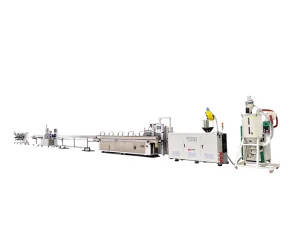
China PU (Polyurethane) Precision Tube Extrusion Line Manufacturer, Factory
Explore Machine Details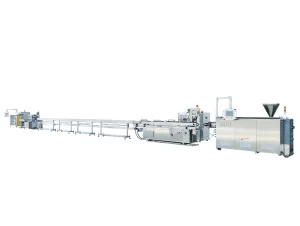
China High Speed PVC Medical Tube Extrusion Line Product, Products
Explore Machine Details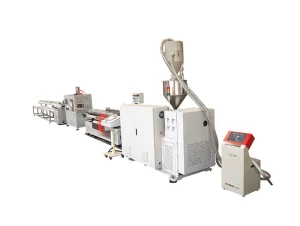
China UHMWPE Profile Extrusion Line Manufacturer, Manufacturers
Explore Machine Details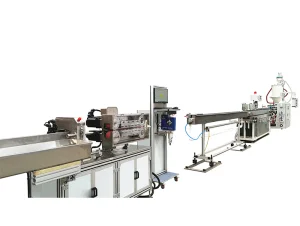
China LDPE,HDPE,PP Precision Tube Extrusion Line Manufacturer, Factory
Explore Machine Details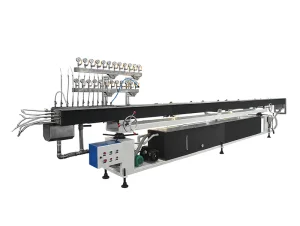
Custom Vacuum Calibration Spraying Cooling Tank Factory, Products
Explore Machine Details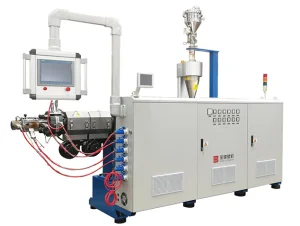
China SJ Series Single Screw Extruder Manufacturer, Manufacturers
Explore Machine Details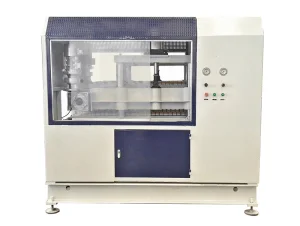
Custom TKC Series Crawler-Type Puller Product, Products
Explore Machine Details