
Featured TPE Processing Equipment & Precision Lines
Explore our high-performance precision extruders, pulling systems, and downstream cutters engineered specifically for TPE, TPV, TPU, and flexible polymer granule processing.
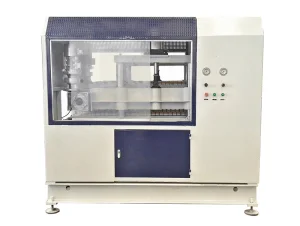
Custom TKC Series Crawler-Type Puller Product, Products
View Product Details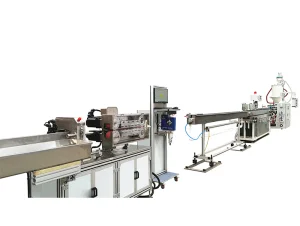
China LDPE,HDPE,PP Precision Tube Extrusion Line Manufacturer, Factory
View Product Details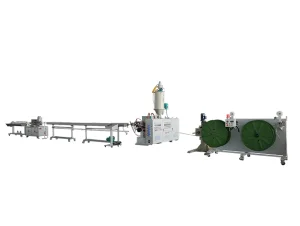
Custom Braided Reinforced Composite Hose/Tube Extrusion Line Product, Products
View Product Details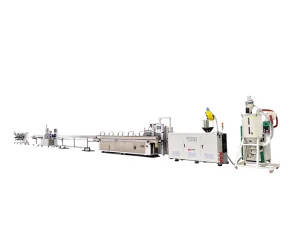
China PU (Polyurethane) Precision Tube Extrusion Line Manufacturer, Factory
View Product Details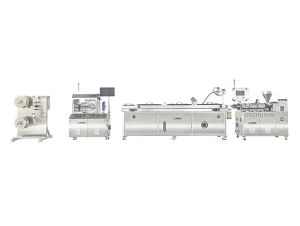
Custom Precision Medical Tube Extrusion Line Manufacturers, Factory
View Product Details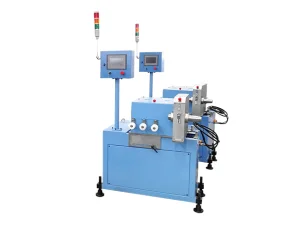
China FQ Series Rotary Fly Knife Cutter Factory, Products
View Product Details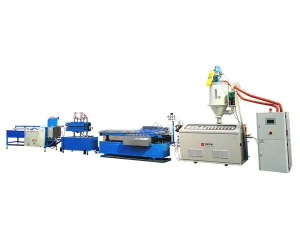
China ABS,PP,PVC Automobile Profile Extrusion Line Manufacturer, Products
View Product Details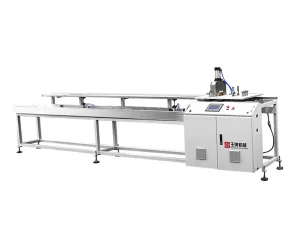
China SC Series Follow-Up Saw Blade Cutter Factories, Product
View Product DetailsExecutive Overview: Global Market Dynamics & Sourcing Landscape
Understanding the shifting macro trends in Thermoplastic Elastomer (TPE) procurement, supply chain resilience, and Chinese manufacturing advantages.
The global shift toward high-performance, recyclable, and lightweight materials has elevated Thermoplastic Elastomers (TPE) from niche polymer substitutes to core engineering materials across automotive, medical, electronics, and industrial manufacturing sectors. TPE granules combine the rubber-like elasticity and tactile feedback of vulcanized thermoset rubbers with the high-speed processing capabilities and 100% recyclability of thermoplastics. As global original equipment manufacturers (OEMs) and Tier-1 suppliers accelerate their efforts to replace PVC and thermoset EPDM rubber due to regulatory pressures (REACH, RoHS, ISO 10993) and sustainability mandates, the strategic demand for high-grade TPE granules has surged exponentially.
China has solidified its position as the world’s leading hub for TPE granule production and customized polymer compounding. Chinese TPE granule manufacturers and factories leverage advanced twin-screw reactive extrusion technology, robust backward integration into petrochemical feedstocks (such as Styrenic Block Copolymers like SBS/SEBS, Polyolefins, Polyurethanes, and Polyesters), and exceptional economies of scale. However, navigating the Chinese manufacturer landscape requires procurement leaders and material engineers to look beyond superficial price-per-kilogram metrics. True competitive advantage is realized by evaluating total cost of ownership (TCO), batch-to-batch polymer consistency, rheological stability, and downstream extrusion/injection processability.
Automotive Lightweighting
Replacing traditional EPDM profiles with low-density TPE/TPV granules reduces component weight by up to 30%, directly extending electric vehicle (EV) driving ranges and reducing carbon emissions.
Medical Cleanroom Compliance
Phthalate-free, non-cytotoxic, and gamma/autoclave sterilizable TPE compounds are replacing plasticized PVC in infusion tubing, medical seals, peristaltic pump hoses, and syringe gaskets.
Circular Economy & Recyclability
Unlike vulcanized rubbers that require landfill disposal or incineration, TPE edge trim, runners, and end-of-life parts can be re-granulated and melt-processed multiple times without severe degradation.
Technical Roadmap: TPE Polymer Classes & Rheological Properties
A granular technical comparison of thermoplastic elastomer families, chemical formulations, and key physical parameters for precision engineering.
The designation "TPE" encompasses a broad range of block copolymers, physical polymer blends, and dynamically vulcanized alloys. Selecting the optimal TPE granule grade requires a deep understanding of phase morphology, glass transition temperatures ($T_g$), hard-block/soft-block ratios, and melt flow behavior under variable shear rates.
| Polymer Family | Chemical Base / Phase Structure | Hardness Range | Max Temp (°C) | Core Application Domain |
|---|---|---|---|---|
| TPS (TPE-S) | Styrene-Ethylene-Butylene-Styrene (SEBS/SBS) | Shore 00 to 65D | 80°C - 100°C | Soft-touch overmolding, grips, seals, consumer goods |
| TPV (TPE-v) | Dynamically Vulcanized EPDM in PP Matrix | Shore 45A to 50D | 125°C - 135°C | Automotive under-hood hoses, weatherstripping seals |
| TPU (TPE-U) | Polyurethane Block Copolymer (Ether/Ester) | Shore 60A to 85D | 100°C - 120°C | High-wear cable jackets, pneumatic tubes, hydraulic hoses |
| TPO (TPE-O) | Polyolefin Blends (PP/EPR or Metallocene PE) | Shore 70A to 65D | 100°C - 110°C | Bumper fascias, automotive interior trim, roofing membranes |
| TPEE (COPE) | Polyester-Ether Segmented Copolymers | Shore 30D to 82D | 140°C - 160°C | Constant-velocity joint boots, high-pressure tubing, gears |
Critical Processing Parameters for High-Precision Extrusion & Injection
When compounding TPE granules, Chinese manufacturers tune specific formulation vectors to match processing equipment setup:
- Melt Flow Index (MFI) & Shear Sensitivity: Extrusion-grade TPE granules require high melt strength and non-Newtonian shear-thinning behavior to prevent profile sag during vacuum calibration. Conversely, injection molding grades demand lower viscosity at high shear rates to fill thin-walled multi-cavity molds without flash.
- Compression Set & Elastic Recovery: For sealing applications (gaskets, weatherstrips), long-term elastic performance is governed by cross-linking density (in TPVs) or physical domain crystallization (in SEBS). Superior factory compounds maintain <25% compression set at 70°C for 22 hours.
- Thermal Stability & Processing Windows: Advanced compounding incorporates primary hindered phenolic antioxidants and secondary phosphite stabilizers to eliminate polymer degradation and color shifting across multi-pass extrusion or heat history.
Synergy: Matching TPE Granule Rheology with Advanced Extrusion Machinery
Why raw material quality and downstream extrusion automation must align perfectly to achieve tight dimensional tolerances and zero-defect output.
Even the highest grade TPE granules will fail to produce compliant end-products if processed on inadequate machinery. In precision applications such as multi-layer medical tubing, automotive fuel/coolant lines, or micro-duct conduit extrusion, raw material rheology and mechanical extrusion hardware act as a unified ecosystem.
As a premier precision plastic extrusion line manufacturer with over 25 years of engineering heritage (tracing back to KINGSWEL GROUP and operating a 16,000 m² state-of-the-art base in Haian, Jiangsu), BAOD EXTRUSION designs custom extrusion lines engineered specifically for flexible polymers like TPE, TPV, TPU, and Soft PVC.
Barrier Screw & Feed Zone Optimization
TPE granules are prone to feed throat bridging and early melt elasticity. BAOD’s custom barrier screws provide gentle, low-shear plasticalization with grooved feed bushings to guarantee pressure stability under ±0.1 MPa.
In-Line Closed-Loop Laser Gauge Calibration
Real-time wall thickness and outer diameter (OD) measurement system feeds back directly to the downstream servo haul-off puller (TKC Series), dynamically maintaining dimensional tolerances within ±0.02mm.
Temperature-Controlled Vacuum Sizing
Ultra-precise water temperature and vacuum pressure control units prevent vacuum collapse, melt fracture, or surface drag lines on soft TPE profiles and tubes during high-speed cooling.
Procurement Framework: Quality Auditing & Compliance Standards
Step-by-step evaluation protocol for auditing China TPE granule manufacturers and equipment suppliers to ensure international compliance.
Global procurement teams must implement a multi-gate auditing framework when selecting a supplier in China. Ensuring batch consistency and regulatory compliance requires direct verification across five crucial operational domains:
1. Raw Material Traceability & Polymer Purity
Top-tier China TPE factories enforce strict incoming raw material verification. Polymer base resins (SEBS, EPDM, PP, TPU), plasticizer oils (white mineral oils with ultra-low aromatic content), and functional additives must accompanied by Lot-specific Certificates of Analysis (CoA). Key parameters include molecular weight distribution ($M_w/M_n$), volatility loss (<0.1% at 105°C), and absence of heavy metals or Polycyclic Aromatic Hydrocarbons (PAHs).
2. Dynamic Compounding & Granulation Tech
Evaluate whether the manufacturer utilizes co-rotating twin-screw extruders equipped with loss-in-weight gravimetric feeders. Underwater pelletizing or air-cooled strand cut systems are crucial for maintaining uniform granule geometry (diameter 2.5mm–3.5mm), eliminating dust/fines, and avoiding variable feed behavior in conversion machinery.
3. Environmental & Regulatory Compliance Matrix
- EU REACH & SVHC: Complete compliance with Substance of Very High Concern list (<0.1% w/w).
- RoHS 3 (Directive 2015/863): Verification of zero lead, mercury, cadmium, hexavalent chromium, and phthalates (DEHP, BBP, DBP, DIBP).
- FDA 21 CFR 177.2600 / EU 10/2011: Food-contact grade migration testing for liquid and fat simulants.
- ISO 10993 Series: Biocompatibility testing (Cytotoxicity, Sensitization, Intracutaneous Reactivity) for medical-grade TPE compounds.
Future Outlook: Bio-Based TPEs, PCR Recycling & AI Smart Compounding
The next decade of Thermoplastic Elastomer innovation: sustainable polymer synthesis, smart manufacturing, and ultra-high-performance alloys.
As the polymer industry transitions toward zero-carbon manufacturing, Chinese research institutes and leading compounding factories are pioneering three major technological revolutions:
Bio-Based & Renewable TPE Granules
Synthesized using plant-derived monomers (such as bio-succinic acid, castor-oil derived polyamides, and bio-based polyols), bio-TPE grades match petro-chemical TPE performance while reducing cradle-to-gate carbon footprint by up to 50%. These grades are gaining rapid traction in consumer electronics and outdoor sport equipment.
Post-Consumer Recycled (PCR) Polymer Blends
Integrating 20% to 50% recycled polyolefins or ocean-bound plastics into TPE compounds without sacrificing tensile strength or flexural endurance represents a monumental technical achievement. Advanced compatibilizers and block-copolymer grafting technologies bridge the interface gap between contaminated recycled streams and virgin elastomers.
AI-Assisted Closed-Loop compounding & Extrusion
Integration of IoT sensors, NIR spectroscopy melt analysis, and real-time viscosity compensation algorithms allows compounding extruders and tube/profile production lines to auto-correct temperature profiles and screw speeds. This guarantees flawless dimensional stability even under subtle material batch variances.
Advanced Downstream Extrusion Lines & Auxiliary Systems
Complete turnkey extrusion systems, corrugated pipe formers, high-speed cutters, and coaling solutions designed for high-efficiency TPE and technical polymer conversion.
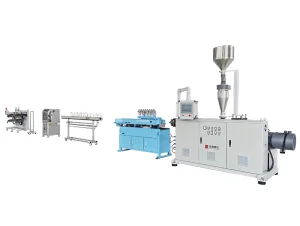
China PA/PE/PP/PVC High Speed Single Wall Corrugated Pipe Extrusion Line Factory, Factories
View Product Details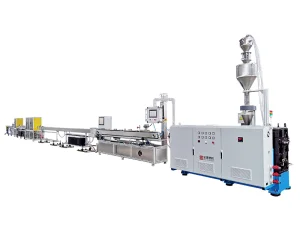
China Precision Small Diameter Tube/Pipe Extrusion Line Manufacturers, Factory
View Product Details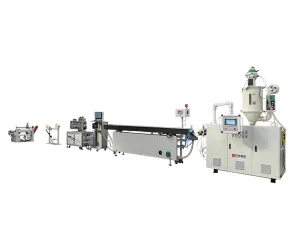
Custom Precision Fluorine Plastic Tube Extrusion Line Factory, Products
View Product Details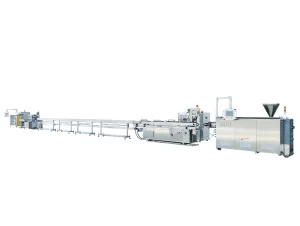
China High Speed PVC Medical Tube Extrusion Line Product, Products
View Product Details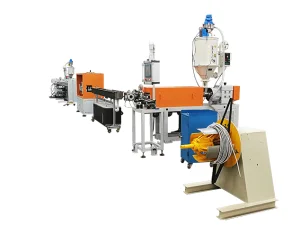
Custom Steel Wire/ Steel Strand / Metal Corrugated Pipe/ Compensation Chain Coating Extrusion Line Manufacturers, Product
View Product Details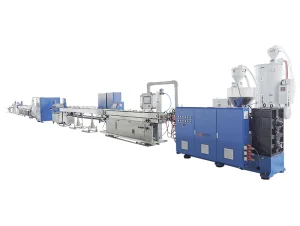
China TPV Knitting Compostie Hose Extrusion Line Factory, Factories
View Product Details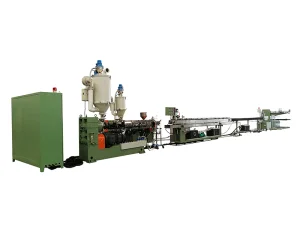
Custom HDPE Silicone Core Tube (Micro Duct) Extrusion Line Factory, Products
View Product Details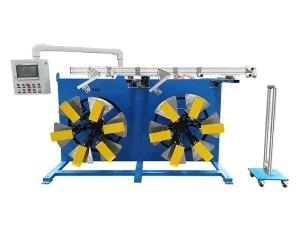
Custom SPS-Dh Auto Precision Winding Displacement Coiler Manufacturers, Products
View Product DetailsTechnical & Procurement FAQ (Frequently Asked Questions)
In-depth answers addressing material selection, manufacturing audits, extrusion setup, and global supply chain logistics.